

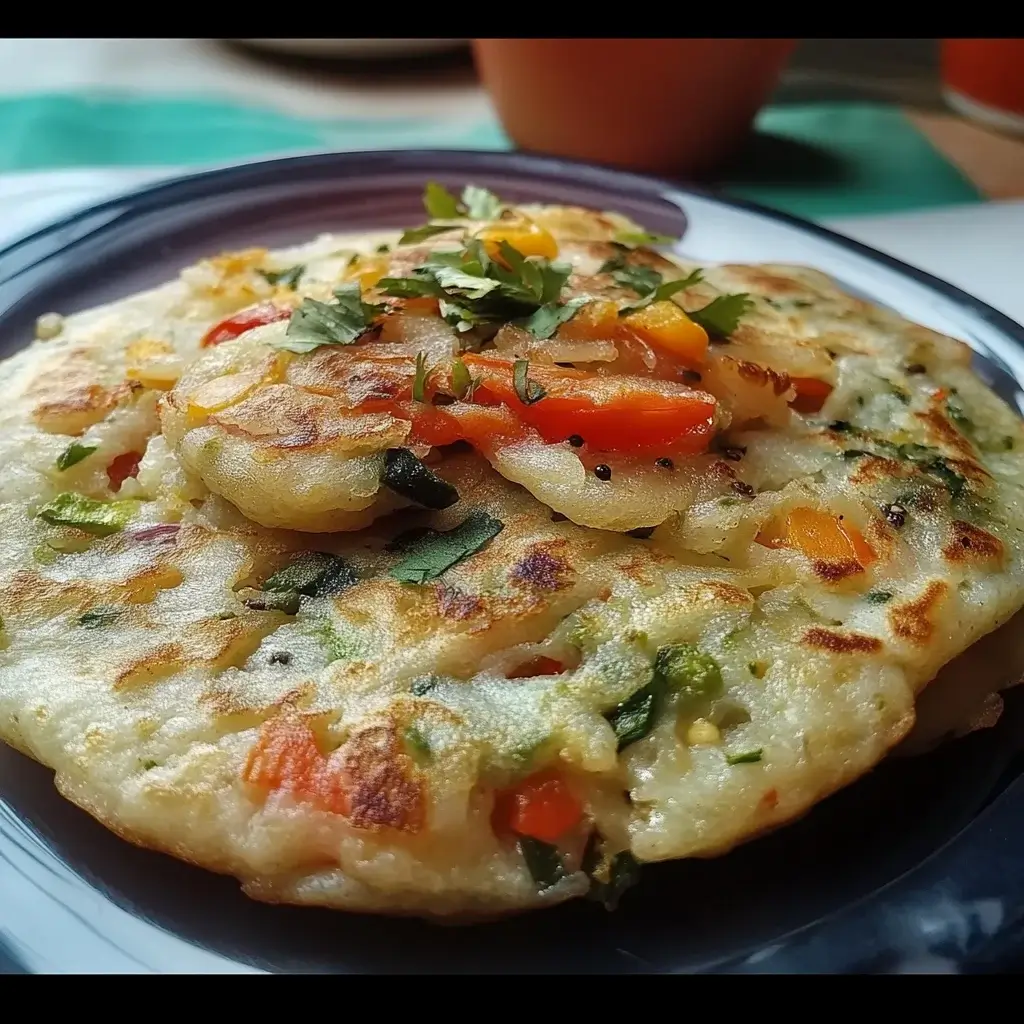
It’s funny how some of the simplest recipes can become family favorites. For us, Vegetable Rava Uttapam is one of those dishes. Initially, I was looking for a quick and healthy breakfast option that wasn’t the usual toast or cereal. I stumbled upon a basic Rava Uttapam recipe and decided to give it a veggie-loaded twist. The first time I made it, I was a bit unsure if the kids would like it – they can be picky about vegetables. But to my surprise, the Uttapams disappeared in minutes! The slightly crispy edges, the soft, flavorful interior, and the burst of colorful veggies won everyone over. Now, it’s a regular feature on our breakfast and even sometimes dinner menu. It’s incredibly versatile – you can use whatever vegetables you have on hand, adjust the spices to your liking, and it’s ready in no time. If you’re looking for a delicious, nutritious, and easy-to-make dish that’s sure to please even the fussiest eaters, then look no further. This Vegetable Rava Uttapam recipe is a guaranteed winner!
Ingredients for Vegetable Rava Uttapam
Here’s what you’ll need to create these delightful and wholesome Vegetable Rava Uttapams. We’ve broken it down for easy preparation:
For the Rava Batter:
- Rava (Semolina/Suji): 2 cups. This is the star ingredient, providing the base texture and structure of the Uttapam. Use fine or medium rava for best results.
- Yogurt (Dahi/Curd): 1 cup. Adds a slight tang and helps in fermentation, making the Uttapams soft and fluffy. Use plain, unsweetened yogurt.
- Water: Approximately 1.5 – 2 cups. To adjust the batter consistency to a thick, pourable state. The amount may vary depending on the rava’s quality.
- Salt: 1 teaspoon, or to taste. Enhances the flavors and balances the tanginess of the yogurt.
- Baking Soda (Sodium Bicarbonate): ¼ teaspoon. A key ingredient for making the Uttapams light and airy. It reacts with the yogurt to create a soft texture.
- Ginger, grated: 1 teaspoon. Adds a warm, slightly spicy flavor to the batter. Fresh ginger is recommended for the best taste.
- Green Chilies, finely chopped: 1-2, or to taste (optional). For a touch of heat. Adjust the quantity based on your spice preference.
- Cilantro (Coriander Leaves), finely chopped: 2 tablespoons. Adds freshness and aroma to the batter.
For the Vegetable Topping:
- Onion, finely chopped: 1 medium. Provides a savory base flavor and a slight crunch. Red or white onions work well.
- Tomato, finely chopped: 1 medium. Adds a juicy tang and vibrant color. Choose firm, ripe tomatoes.
- Carrot, finely grated: ½ cup. Contributes sweetness, color, and nutritional value. Grating ensures it cooks quickly.
- Capsicum (Bell Pepper), finely chopped: ½ cup (any color). Adds a mild, slightly sweet flavor and a pleasant crunch. Green, red, or yellow capsicum can be used.
- Green Peas, boiled or frozen: ½ cup. Adds sweetness and a pop of green color. Frozen peas should be thawed before use.
- Corn kernels, boiled or frozen: ½ cup. Adds sweetness and a chewy texture. Frozen corn should be thawed before use.
- Mustard Seeds: 1 teaspoon. For tempering and adding a nutty flavor to the topping.
- Urad Dal (Split Black Gram): 1 teaspoon. For tempering and adding a nutty flavor and slight crunch to the topping.
- Curry Leaves: 1 sprig. For tempering, imparting a distinct aromatic flavor.
- Oil: 2-3 tablespoons. For cooking the Uttapams and tempering the vegetables. Use any neutral cooking oil.
- Ghee (Clarified Butter): Optional, for cooking Uttapams. Adds a rich flavor and aroma.
Instructions: Making Vegetable Rava Uttapam
Follow these step-by-step instructions to prepare delicious and fluffy Vegetable Rava Uttapams at home:
Step 1: Prepare the Rava Batter
- Combine Rava and Yogurt: In a large mixing bowl, add the rava (semolina) and yogurt. Mix them well using your hands or a spoon until the rava is evenly coated with the yogurt.
- Add Water Gradually: Gradually add water, about ½ cup at a time, while mixing continuously to avoid lumps. Aim for a thick, yet pourable batter consistency, similar to pancake batter but slightly thicker. The total amount of water may vary depending on the quality and type of rava.
- Add Salt and Spices: Add salt, grated ginger, and chopped green chilies (if using) to the batter. Mix well to incorporate all the ingredients evenly.
- Rest the Batter: Cover the bowl with a lid or a clean cloth and let the batter rest for at least 30 minutes, or ideally for 1-2 hours. This resting time allows the rava to absorb the moisture, resulting in softer Uttapams. The batter will thicken slightly as it rests.
- Adjust Consistency (If Needed): After resting, check the batter consistency. If it has become too thick, add a little more water to bring it back to a thick, pourable consistency. The batter should be easily spreadable but not too runny.
- Add Baking Soda: Just before you are ready to cook the Uttapams, add the baking soda to the batter. Gently mix it in. Do not overmix at this stage. The baking soda will help make the Uttapams light and fluffy.
Step 2: Prepare the Vegetable Topping
- Heat Oil for Tempering: Heat 1 tablespoon of oil in a small pan or skillet over medium heat.
- Temper Mustard Seeds and Urad Dal: Once the oil is hot, add mustard seeds. When they start to splutter, add urad dal and curry leaves. Sauté for a few seconds until the urad dal turns light golden brown and the curry leaves become fragrant.
- Sauté Onions: Add finely chopped onions to the pan and sauté until they turn translucent and slightly pink.
- Add Other Vegetables: Add finely chopped tomatoes, grated carrot, chopped capsicum, boiled green peas, and boiled corn kernels to the pan.
- Sauté Vegetables Lightly: Sauté the vegetables for 2-3 minutes until they are slightly softened but still retain some of their crunch. Do not overcook them, as they will cook further on the Uttapam.
- Add Cilantro and Salt (Optional): Sprinkle chopped cilantro over the vegetables. You can add a pinch of salt to the vegetables at this stage if desired, but remember that the batter already has salt. Mix well and remove the pan from heat. Keep the vegetable topping aside.
Step 3: Cook the Vegetable Rava Uttapams
- Heat a Griddle or Tawa: Heat a flat griddle or tawa (preferably non-stick) over medium heat. You can grease the tawa lightly with oil or ghee if desired, especially for the first few Uttapams to prevent sticking. For subsequent Uttapams, greasing may not be necessary.
- Pour the Batter: Once the tawa is hot, pour a ladleful of batter (about ½ cup) in the center of the tawa. Gently spread it in a circular motion to form a thick, round Uttapam. Unlike dosa, Uttapams are meant to be thick and not very thin. Aim for a thickness of about ¼ to ½ inch.
- Sprinkle Vegetable Topping: Immediately sprinkle a generous amount of the prepared vegetable topping evenly over the Uttapam batter on the tawa. Gently press the vegetables into the batter with a spatula so they adhere well.
- Drizzle Oil or Ghee: Drizzle a little oil or ghee around the edges of the Uttapam and on top of the vegetables. This helps in even cooking and adds flavor.
- Cook Covered (Optional): You can cover the Uttapam with a lid for a minute or two in the beginning. Covering helps steam the Uttapam and cook it through faster, making it softer. However, for slightly crispy edges, you can cook uncovered for a longer time.
- Cook Until Golden Brown: Cook the Uttapam over medium heat until the base turns golden brown and crispy. This will take about 3-4 minutes. You will see the edges starting to lift and become golden.
- Flip and Cook the Other Side: Once the base is cooked, gently flip the Uttapam using a flat spatula. Cook the other side for another 2-3 minutes until it is also lightly golden brown and cooked through. The vegetable topping side will be facing down on the tawa. Press gently with the spatula to ensure even cooking.
- Remove and Serve: Once both sides are cooked to a golden brown and the Uttapam is cooked through (you can check by gently pressing – it should feel firm and cooked), remove it from the tawa and place it on a serving plate.
- Repeat for Remaining Batter: Repeat steps 2-8 for the remaining batter and vegetable topping to make more Vegetable Rava Uttapams. Add oil or ghee as needed for each Uttapam.
- Serve Hot: Serve the Vegetable Rava Uttapams hot immediately with your favorite accompaniments like sambar, coconut chutney, tomato chutney, or yogurt. They taste best when served fresh and warm.
Nutrition Facts of Vegetable Rava Uttapam
(Approximate values per serving – 2 Uttapams)
- Serving Size: 2 Uttapams
- Calories: 250-300 kcal
- Carbohydrates: 40-45 grams
Note: Nutritional values are estimates and can vary based on specific ingredients, portion sizes, and cooking methods. These values are for a standard serving of two medium-sized Vegetable Rava Uttapams.
Preparation Time for Vegetable Rava Uttapam
This recipe is known for its quick preparation, making it ideal for busy mornings or weeknight meals. Here’s a breakdown:
- Prep Time: 20 minutes (includes chopping vegetables, preparing batter, and resting time)
- Chopping Vegetables: 10 minutes
- Batter Preparation: 5 minutes
- Batter Resting: 30 minutes to 2 hours (passive time, can be done ahead)
- Cook Time: 20-25 minutes (for cooking all Uttapams, approximately 3-4 minutes per Uttapam)
- Total Time: 40-45 minutes (excluding resting time) to 2 hours 45 minutes (including maximum resting time)
Description: Vegetable Rava Uttapam is a relatively quick recipe. The active preparation time, including chopping vegetables and mixing the batter, is about 20 minutes. The batter requires a resting period of at least 30 minutes, but ideally 1-2 hours, to allow the rava to soften. Cooking each Uttapam takes around 3-4 minutes. Overall, from start to finish, including resting time, you can have delicious Vegetable Rava Uttapams ready in under 45 minutes to a maximum of around 2 hours 45 minutes if you opt for a longer resting time for an even softer texture.
How to Serve Vegetable Rava Uttapam
Vegetable Rava Uttapam is a versatile dish that can be enjoyed in various ways. Here are some popular serving suggestions:
- Traditional Accompaniments:
- Sambar: A classic South Indian lentil and vegetable stew. Sambar’s tangy and savory flavors perfectly complement the Uttapam.
- Coconut Chutney: A refreshing and slightly sweet chutney made with coconut, lentils, and spices. It’s a must-have with Uttapam.
- Tomato Chutney: A tangy and spicy chutney made with tomatoes, onions, and spices. Adds a zing to the Uttapam.
- Peanut Chutney: A rich and nutty chutney made with peanuts, lentils, and spices. Offers a different flavor profile.
- Other Serving Ideas:
- Yogurt (Dahi/Curd): Plain yogurt or raita (yogurt with vegetables) provides a cooling and soothing contrast to the Uttapam.
- Pickle: Indian pickles like mango pickle, lime pickle, or mixed vegetable pickle can add a spicy and tangy kick.
- Ghee or Butter: A dollop of ghee or butter on top of the hot Uttapam enhances its flavor and richness.
- Podis (Spice Powders): Sprinkle some podis like Idli Podi or Gunpowder (a spicy lentil and chili powder) for an extra layer of flavor and spice.
- Meal Times:
- Breakfast: Uttapam is a popular and healthy breakfast choice in South India. It’s filling and provides sustained energy.
- Brunch: Perfect for a leisurely brunch, especially when served with a variety of chutneys and sambar.
- Lunch/Dinner: Uttapam can also be served as a light lunch or dinner. Pair it with sambar and chutney for a complete meal.
- Snack: Smaller Uttapams can be made and served as a satisfying evening snack.
- Plating and Presentation:
- Serve Hot: Uttapams are best enjoyed hot and fresh off the tawa.
- Colorful Garnish: Garnish with fresh cilantro or a sprig of curry leaves for visual appeal.
- Arrange Attractively: Arrange the Uttapams on a plate with small bowls of chutney and sambar for an inviting presentation.
- Cut into Wedges: For easier serving and eating, especially for kids, you can cut the Uttapams into wedges.
Additional Tips for Perfect Vegetable Rava Uttapam
Here are 8 helpful tips to ensure your Vegetable Rava Uttapams turn out perfect every time:
- Rava Type: Use fine or medium rava (semolina/suji) for the best texture. Coarse rava can make the Uttapams slightly grainy. If using coarse rava, you might need to soak it for a longer time.
- Batter Consistency is Key: The batter should be thick yet pourable, similar to pancake batter but a bit thicker. If the batter is too thin, the Uttapams will spread too much and may not be fluffy. If it’s too thick, they might be dense. Adjust water accordingly to achieve the right consistency.
- Resting Time is Crucial: Don’t skip the resting time for the batter. Resting allows the rava to absorb the moisture and soften, resulting in softer and fluffier Uttapams. A minimum of 30 minutes is recommended, but 1-2 hours is even better.
- Fresh Ingredients for Topping: Use fresh and finely chopped vegetables for the topping. Finely chopped vegetables cook faster on the Uttapam and adhere better to the batter. You can use a variety of vegetables like onions, tomatoes, carrots, capsicum, peas, corn, and even spinach or beetroot.
- Tempering for Flavor: Tempering mustard seeds, urad dal, and curry leaves in oil and then adding it to the vegetables enhances the flavor significantly. Don’t skip this step for a more authentic taste.
- Cook on Medium Heat: Cook the Uttapams on medium heat. High heat can burn the outside quickly while leaving the inside uncooked. Medium heat ensures even cooking and golden-brown color.
- Don’t Overcrowd the Tawa: Cook one or two Uttapams at a time, depending on the size of your tawa. Overcrowding can lower the tawa temperature and make it difficult to cook them properly.
- Serve Immediately: Vegetable Rava Uttapams taste best when served hot and fresh off the tawa. They tend to lose their crispness and become slightly chewy if left for too long. Prepare them just before serving for the best experience.
Frequently Asked Questions (FAQ) about Vegetable Rava Uttapam
Q1: Can I make Vegetable Rava Uttapam without yogurt?
A: Yes, you can make Uttapam without yogurt, but it will slightly alter the texture and taste. Yogurt adds a slight tang and makes the Uttapams softer and fluffier due to fermentation. If you don’t have yogurt, you can use sour buttermilk or add a tablespoon of lemon juice to the batter for a similar tangy flavor. However, the texture might be slightly less soft.
Q2: Can I prepare the batter in advance and store it?
A: Yes, you can prepare the rava batter in advance and store it in the refrigerator for up to 24 hours. However, it’s best to add the baking soda just before cooking the Uttapams. If you refrigerate the batter with baking soda, it might lose its effectiveness over time. When you take the batter out of the refrigerator, you may need to add a little water to adjust the consistency, as it might thicken while resting in the fridge.
Q3: What other vegetables can I add to the Uttapam topping?
A: You can get creative with the vegetable topping! Besides onions, tomatoes, carrots, and capsicum, you can also add:
- Spinach: Finely chopped spinach leaves add a healthy touch.
- Beetroot: Grated beetroot adds a vibrant color and sweetness.
- Mushrooms: Finely chopped mushrooms add an earthy flavor.
- Cauliflower/Broccoli: Finely grated or chopped cauliflower or broccoli florets.
- Potato: Boiled and mashed or finely diced potatoes.
- Paneer (Indian Cheese): Crumbled paneer adds protein and richness.
Q4: How do I make Rava Uttapams crispy?
A: To make crispy Rava Uttapams:
- Use less water: Ensure the batter is not too runny. A slightly thicker batter tends to crisp up better.
- Cook on medium-high heat: Cook on medium to medium-high heat for a longer time, allowing the edges to crisp up.
- Use ghee: Cooking with ghee instead of oil can help achieve crispier edges and a richer flavor.
- Don’t cover while cooking: Avoid covering the Uttapams while cooking, as steam can make them softer. Cook uncovered for crispier edges.
Q5: My Uttapams are sticking to the tawa, what can I do?
A: If your Uttapams are sticking to the tawa:
- Ensure the tawa is hot enough: The tawa should be properly heated before pouring the batter. If it’s not hot enough, the Uttapam might stick.
- Use a non-stick tawa: A good quality non-stick tawa is highly recommended for making Uttapams.
- Grease the tawa: Lightly grease the tawa with oil or ghee before pouring the batter, especially for the first few Uttapams.
- Don’t flip too early: Allow the base to cook and become golden brown before attempting to flip. If you try to flip too early, it might stick and break.
Q6: Can I make Uttapams without baking soda?
A: Yes, you can make Uttapams without baking soda, but they will be slightly denser and less fluffy. Baking soda helps in making the Uttapams light and airy. If you want to avoid baking soda, you can try using a pinch of eno fruit salt as an alternative, or simply make them without any leavening agent. The texture will be different but still tasty.
Q7: Can I make these Uttapams gluten-free?
A: Rava (semolina) is not gluten-free as it is made from wheat. To make gluten-free Uttapams, you can substitute rava with rice flour, quinoa flour, or a mix of gluten-free flours. You may need to adjust the liquid ratio and experiment a bit to get the right consistency and texture with gluten-free flours.
Q8: How can I make these Uttapams spicier?
A: To make Vegetable Rava Uttapams spicier:
- Increase green chilies: Add more finely chopped green chilies to the batter and vegetable topping.
- Add red chili powder: You can add a pinch of red chili powder to the batter and vegetable topping for extra heat and color.
- Use spicy podis: Serve with spicy podis like Gunpowder (Idli Podi) or Milagai Podi.
- Add pepper: Sprinkle black pepper powder on the Uttapams while cooking or in the batter.
- Use spicy chutney: Serve with spicy chutneys like red chili garlic chutney or schezwan chutney for a fiery kick.

Vegetable Rava Uttapam Recipe
Ingredients
Here’s what you’ll need to create these delightful and wholesome Vegetable Rava Uttapams. We’ve broken it down for easy preparation:
For the Rava Batter:
- Rava (Semolina/Suji): 2 cups. This is the star ingredient, providing the base texture and structure of the Uttapam. Use fine or medium rava for best results.
- Yogurt (Dahi/Curd): 1 cup. Adds a slight tang and helps in fermentation, making the Uttapams soft and fluffy. Use plain, unsweetened yogurt.
- Water: Approximately 1.5 – 2 cups. To adjust the batter consistency to a thick, pourable state. The amount may vary depending on the rava’s quality.
- Salt: 1 teaspoon, or to taste. Enhances the flavors and balances the tanginess of the yogurt.
- Baking Soda (Sodium Bicarbonate): ¼ teaspoon. A key ingredient for making the Uttapams light and airy. It reacts with the yogurt to create a soft texture.
- Ginger, grated: 1 teaspoon. Adds a warm, slightly spicy flavor to the batter. Fresh ginger is recommended for the best taste.
- Green Chilies, finely chopped: 1-2, or to taste (optional). For a touch of heat. Adjust the quantity based on your spice preference.
- Cilantro (Coriander Leaves), finely chopped: 2 tablespoons. Adds freshness and aroma to the batter.
For the Vegetable Topping:
- Onion, finely chopped: 1 medium. Provides a savory base flavor and a slight crunch. Red or white onions work well.
- Tomato, finely chopped: 1 medium. Adds a juicy tang and vibrant color. Choose firm, ripe tomatoes.
- Carrot, finely grated: ½ cup. Contributes sweetness, color, and nutritional value. Grating ensures it cooks quickly.
- Capsicum (Bell Pepper), finely chopped: ½ cup (any color). Adds a mild, slightly sweet flavor and a pleasant crunch. Green, red, or yellow capsicum can be used.
- Green Peas, boiled or frozen: ½ cup. Adds sweetness and a pop of green color. Frozen peas should be thawed before use.
- Corn kernels, boiled or frozen: ½ cup. Adds sweetness and a chewy texture. Frozen corn should be thawed before use.
- Mustard Seeds: 1 teaspoon. For tempering and adding a nutty flavor to the topping.
- Urad Dal (Split Black Gram): 1 teaspoon. For tempering and adding a nutty flavor and slight crunch to the topping.
- Curry Leaves: 1 sprig. For tempering, imparting a distinct aromatic flavor.
- Oil: 2-3 tablespoons. For cooking the Uttapams and tempering the vegetables. Use any neutral cooking oil.
- Ghee (Clarified Butter): Optional, for cooking Uttapams. Adds a rich flavor and aroma.
Instructions
Follow these step-by-step instructions to prepare delicious and fluffy Vegetable Rava Uttapams at home:
Step 1: Prepare the Rava Batter
- Combine Rava and Yogurt: In a large mixing bowl, add the rava (semolina) and yogurt. Mix them well using your hands or a spoon until the rava is evenly coated with the yogurt.
- Add Water Gradually: Gradually add water, about ½ cup at a time, while mixing continuously to avoid lumps. Aim for a thick, yet pourable batter consistency, similar to pancake batter but slightly thicker. The total amount of water may vary depending on the quality and type of rava.
- Add Salt and Spices: Add salt, grated ginger, and chopped green chilies (if using) to the batter. Mix well to incorporate all the ingredients evenly.
- Rest the Batter: Cover the bowl with a lid or a clean cloth and let the batter rest for at least 30 minutes, or ideally for 1-2 hours. This resting time allows the rava to absorb the moisture, resulting in softer Uttapams. The batter will thicken slightly as it rests.
- Adjust Consistency (If Needed): After resting, check the batter consistency. If it has become too thick, add a little more water to bring it back to a thick, pourable consistency. The batter should be easily spreadable but not too runny.
- Add Baking Soda: Just before you are ready to cook the Uttapams, add the baking soda to the batter. Gently mix it in. Do not overmix at this stage. The baking soda will help make the Uttapams light and fluffy.
Step 2: Prepare the Vegetable Topping
- Heat Oil for Tempering: Heat 1 tablespoon of oil in a small pan or skillet over medium heat.
- Temper Mustard Seeds and Urad Dal: Once the oil is hot, add mustard seeds. When they start to splutter, add urad dal and curry leaves. Sauté for a few seconds until the urad dal turns light golden brown and the curry leaves become fragrant.
- Sauté Onions: Add finely chopped onions to the pan and sauté until they turn translucent and slightly pink.
- Add Other Vegetables: Add finely chopped tomatoes, grated carrot, chopped capsicum, boiled green peas, and boiled corn kernels to the pan.
- Sauté Vegetables Lightly: Sauté the vegetables for 2-3 minutes until they are slightly softened but still retain some of their crunch. Do not overcook them, as they will cook further on the Uttapam.
- Add Cilantro and Salt (Optional): Sprinkle chopped cilantro over the vegetables. You can add a pinch of salt to the vegetables at this stage if desired, but remember that the batter already has salt. Mix well and remove the pan from heat. Keep the vegetable topping aside.
Step 3: Cook the Vegetable Rava Uttapams
- Heat a Griddle or Tawa: Heat a flat griddle or tawa (preferably non-stick) over medium heat. You can grease the tawa lightly with oil or ghee if desired, especially for the first few Uttapams to prevent sticking. For subsequent Uttapams, greasing may not be necessary.
- Pour the Batter: Once the tawa is hot, pour a ladleful of batter (about ½ cup) in the center of the tawa. Gently spread it in a circular motion to form a thick, round Uttapam. Unlike dosa, Uttapams are meant to be thick and not very thin. Aim for a thickness of about ¼ to ½ inch.
- Sprinkle Vegetable Topping: Immediately sprinkle a generous amount of the prepared vegetable topping evenly over the Uttapam batter on the tawa. Gently press the vegetables into the batter with a spatula so they adhere well.
- Drizzle Oil or Ghee: Drizzle a little oil or ghee around the edges of the Uttapam and on top of the vegetables. This helps in even cooking and adds flavor.
- Cook Covered (Optional): You can cover the Uttapam with a lid for a minute or two in the beginning. Covering helps steam the Uttapam and cook it through faster, making it softer. However, for slightly crispy edges, you can cook uncovered for a longer time.
- Cook Until Golden Brown: Cook the Uttapam over medium heat until the base turns golden brown and crispy. This will take about 3-4 minutes. You will see the edges starting to lift and become golden.
- Flip and Cook the Other Side: Once the base is cooked, gently flip the Uttapam using a flat spatula. Cook the other side for another 2-3 minutes until it is also lightly golden brown and cooked through. The vegetable topping side will be facing down on the tawa. Press gently with the spatula to ensure even cooking.
- Remove and Serve: Once both sides are cooked to a golden brown and the Uttapam is cooked through (you can check by gently pressing – it should feel firm and cooked), remove it from the tawa and place it on a serving plate.
- Repeat for Remaining Batter: Repeat steps 2-8 for the remaining batter and vegetable topping to make more Vegetable Rava Uttapams. Add oil or ghee as needed for each Uttapam.
- Serve Hot: Serve the Vegetable Rava Uttapams hot immediately with your favorite accompaniments like sambar, coconut chutney, tomato chutney, or yogurt. They taste best when served fresh and warm.
Nutrition
- Serving Size: one normal portion
- Calories: 300
- Carbohydrates: 45 grams