Ingredients
This recipe relies on simple, common pantry staples to create its signature fudgy texture and deep chocolate flavor. Each component plays a crucial role in achieving the perfect crinkle.
- 1 cup (125g) All-Purpose Flour: The structural foundation of our cookies. Standard all-purpose flour provides the perfect balance of protein to give the cookies shape without making them tough.
- 1 cup (200g) Granulated Sugar: This is our primary sweetener. It not only adds sweetness but also contributes to the cookies’ spread and the crispy edges that contrast so beautifully with the soft center.
- ½ cup (45g) Unsweetened Cocoa Powder: The heart and soul of the cookie’s flavor. A good quality, unsweetened cocoa powder (natural or Dutch-processed will work) provides the deep, rich, and intense chocolate taste that makes these cookies so irresistible.
- ½ cup (120ml) Vegetable Oil: Oil is the secret to the ultra-fudgy, brownie-like texture. Unlike butter, which contains water and milk solids, oil is pure fat, which coats the flour proteins and inhibits gluten development, resulting in a moister, denser, and chewier cookie.
- 2 Large Eggs: Acting as a binder, eggs hold the dough together. They also add richness, moisture, and help with the leavening, contributing to the cookie’s puff and subsequent “crinkle.”
- 1 teaspoon Baking Powder: This is our primary leavening agent. It creates the carbon dioxide gas bubbles that cause the cookies to rise rapidly in the oven. This lift is essential for creating the cracks as the surface sets and breaks apart.
- 1 teaspoon Vanilla Extract: A crucial flavor enhancer. Vanilla doesn’t make the cookies taste like vanilla; instead, it deepens, rounds out, and elevates the chocolate flavor, making it more complex and aromatic.
- Pinch of Salt: A small amount of salt is a baker’s best friend. It balances the sweetness of the sugar and intensifies the chocolate notes, preventing the cookies from tasting flat.
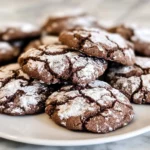
- ½ cup (65g) Powdered Sugar (for rolling): This is the magic ingredient for the signature crinkle look. It serves two purposes: it creates the beautiful white, snowy coating, and as the cookie spreads, it absorbs a tiny bit of surface moisture, which helps the top dry out and crack dramatically.
Instructions
Following these steps carefully, particularly the chilling time, is the key to achieving perfectly fudgy cookies with dramatic, beautiful crinkles. The process is straightforward and rewarding.
Step 1: Combine the Dry Ingredients
In a medium-sized mixing bowl, add the all-purpose flour, unsweetened cocoa powder, baking powder, and the pinch of salt. Use a whisk to thoroughly combine these ingredients for at least 30 seconds. Whisking is more effective than stirring with a spoon because it not only breaks up any clumps (especially in the cocoa powder) but also aerates the mixture, ensuring the leavening agent and salt are evenly distributed throughout the flour. This simple step is crucial for a uniform texture and rise in your finished cookies. Set the bowl aside.
Step 2: Mix the Wet Ingredients
In a separate, larger bowl (or the bowl of a stand mixer fitted with the paddle attachment), add the granulated sugar and vegetable oil. Mix on medium speed with an electric hand mixer or your stand mixer for about 1-2 minutes. The mixture should look thick, glossy, and well-combined. Next, add the large eggs, one at a time, beating well after each addition until fully incorporated. Beat in the vanilla extract. The mixture will become lighter in color and slightly fluffy. This process emulsifies the ingredients, creating a stable base for the dough.
Step 3: Form the Dough
Pour the combined dry ingredients from the first bowl into the bowl of wet ingredients. Start mixing on a low speed to prevent a cloud of cocoa and flour from dusting your kitchen. Mix only until the flour streaks have just disappeared. It is vital not to overmix at this stage. Overmixing develops the gluten in the flour, which would result in a tough, cakey cookie rather than the desired soft, fudgy texture. The final dough will be very soft, sticky, and look more like a thick brownie batter than a typical cookie dough. Do not be alarmed by the stickiness; this is exactly what it should look like.
Step 4: Chill the Dough (The Most Important Step)
Cover the bowl of dough tightly with plastic wrap, pressing the wrap directly onto the surface of the dough to prevent a skin from forming. Place the bowl in the refrigerator to chill for a minimum of 4 hours, though overnight is even better. This chilling period is non-negotiable. It allows the oil to solidify, transforming the sticky, unmanageable dough into a firm, scoopable consistency. Chilling also allows the flavors to meld and deepen, and most importantly, it prevents the cookies from spreading too quickly in the oven, which is essential for achieving the signature crinkle effect.
Step 5: Preheat and Prepare for Baking
When you are ready to bake, preheat your oven to 350°F (175°C). Line two large baking sheets with parchment paper. This prevents the cookies from sticking, ensures even browning on the bottom, and makes for incredibly easy cleanup. Place the powdered sugar in a small, shallow bowl.
Step 6: Scoop and Roll the Cookies
Remove the chilled dough from the refrigerator. It should be firm to the touch. Using a small cookie scoop (about 1 tablespoon in size) or a regular tablespoon, scoop out portions of the dough. Roll each portion between your palms to form a smooth, uniform ball, about 1 inch in diameter.
Step 7: Coat in Powdered Sugar
Drop each dough ball directly into the bowl of powdered sugar. Roll it around generously until it is completely and thickly coated on all sides. Don’t be shy with the powdered sugar; a thick coating is necessary for a dramatic, white finish. The thicker the coat, the more pronounced the final crinkle will be.
Step 8: Bake the Cookies
Place the sugar-coated dough balls onto your prepared baking sheets, ensuring you leave at least 2 inches of space between each one to allow for spreading. Bake in the preheated oven for 10-12 minutes. The cookies will puff up, spread out, and the beautiful cracks will form across the surface. The edges should look set, but the center will still appear slightly soft. Be careful not to overbake, as this will dry out the fudgy center.
Step 9: Cool the Cookies
Remove the baking sheets from the oven and let the cookies cool on the sheets for 5 minutes. They will be very delicate at first, and this brief cooling period allows them to set up. After 5 minutes, use a thin spatula to carefully transfer the cookies to a wire cooling rack to cool completely. The cookies will firm up as they cool, developing their classic crisp-on-the-outside, chewy-on-the-inside texture.
Nutrition
- Serving Size: one normal portion
- Calories: 110
- Sugar: 10g
- Carbohydrates: 15g
- Protein: 1g