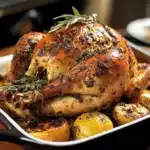
Ingredients
To create this masterpiece of a Buttered Herb Roasted Turkey, you’ll need a selection of fresh, high-quality ingredients. The combination of butter and herbs is what truly elevates this recipe, so don’t skimp on quality. Here’s what you’ll need to gather:
- Turkey: 1 (12-14 pound) whole turkey, thawed if frozen. Choosing the right turkey is the foundation of this dish. For a family gathering, a 12-14 pound turkey is ideal, providing ample servings and leftovers. Consider a fresh, high-quality turkey if possible, as they tend to have better flavor and moisture retention compared to frozen birds. If using a frozen turkey, ensure it is completely thawed before you begin – this can take several days in the refrigerator, so plan ahead.
- Unsalted Butter: 1 cup (2 sticks), softened. Butter is the star of this recipe, contributing richness, flavor, and that gorgeous golden-brown skin. Unsalted butter allows you to control the saltiness of the dish, and softening it is crucial for creating the herb butter mixture and for easy application under the skin.
- Fresh Rosemary: 2 tablespoons, finely chopped. Rosemary brings a piney, slightly lemony aroma that complements turkey beautifully. Fresh rosemary is far superior to dried in this recipe, offering a brighter and more pronounced flavor. Finely chopping it ensures even distribution in the butter and optimal flavor release during roasting.
- Fresh Thyme: 2 tablespoons, finely chopped. Thyme adds an earthy, slightly minty note that balances the richness of the butter and the pungency of the garlic. Like rosemary, fresh thyme is essential for the best flavor. Finely chop it to maximize its aromatic contribution to the herb butter.
- Garlic: 6 cloves, minced. Garlic provides a pungent and savory base note to the herb butter, enhancing the overall flavor profile of the turkey. Freshly minced garlic is crucial for its robust flavor; avoid using pre-minced garlic as it often lacks the same intensity.
- Lemon: 1, halved. Lemon adds brightness and acidity, cutting through the richness of the butter and enhancing the other flavors. Halving the lemon allows you to insert one half into the cavity for internal flavoring and use the other half to squeeze over the turkey for added zest and to help with browning.
- Salt: 2 tablespoons, plus more to taste. Salt is essential for seasoning the turkey and bringing out its natural flavors. Use kosher salt or sea salt for best results. The amount may need to be adjusted based on the size of your turkey and personal preference.
- Black Pepper: 1 tablespoon, freshly ground, plus more to taste. Freshly ground black pepper provides a pungent and aromatic counterpoint to the salt and herbs. Grind it just before using for the most intense flavor.
- Optional: Chicken or Turkey Broth: 1 cup. Broth is optional but highly recommended for adding moisture to the roasting pan and creating flavorful pan drippings for gravy. Use low-sodium broth to control the salt level.
- Optional: Vegetables for Roasting Pan (Onions, Carrots, Celery): 2 cups, roughly chopped. Adding vegetables to the roasting pan is a fantastic way to infuse the pan drippings with even more flavor and create delicious roasted vegetables as a side dish. Onions, carrots, and celery are classic choices, but you can also include potatoes, parsnips, or other root vegetables.
Instructions
Roasting a turkey can seem daunting, but with this step-by-step guide, you’ll find it’s quite straightforward. The key is to follow each step carefully and pay attention to the details, especially regarding temperature and cooking time.
- Prepare the Turkey: If using a frozen turkey, ensure it is completely thawed. Remove the turkey from its packaging and remove the giblets and neck from the cavity. Pat the turkey dry inside and out with paper towels. This step is crucial for achieving crispy skin. Excess moisture will steam the skin instead of allowing it to brown and crisp.
- Preheat Oven and Prepare Roasting Pan: Preheat your oven to 325°F (160°C). This lower temperature ensures even cooking and prevents the turkey from drying out before it’s cooked through. Place a roasting rack inside a large roasting pan. The rack elevates the turkey, allowing hot air to circulate evenly around it for more consistent cooking and crispier skin on the bottom. If you don’t have a roasting rack, you can use roughly chopped vegetables (onions, carrots, celery) as a makeshift rack.
- Make the Herb Butter: In a medium bowl, combine the softened butter, chopped rosemary, chopped thyme, minced garlic, salt, and pepper. Mix well with a fork or spatula until all ingredients are evenly incorporated and the butter is fragrant with herbs and garlic. This herb butter is the flavor powerhouse of the recipe. Ensure the butter is softened enough to easily mix with the herbs and spices.
- Loosen Turkey Skin: Gently loosen the skin of the turkey from the breast meat and thighs. Carefully slide your fingers or a spatula under the skin, starting from the neck cavity and working your way down. Be careful not to tear the skin. Creating pockets under the skin allows you to insert the herb butter directly onto the meat, maximizing flavor infusion and keeping the meat moist during roasting.
- Apply Herb Butter: Take generous spoonfuls of the herb butter and insert it under the skin, directly onto the breast meat and thighs. Spread the butter evenly under the skin using your hands, ensuring it covers as much of the meat as possible. Massage any remaining herb butter all over the outside of the turkey skin. This exterior butter layer will contribute to the beautiful golden-brown color and crispy skin.
- Stuff the Cavity (Optional): Place one lemon half inside the turkey cavity. You can also add aromatics like onion wedges, garlic cloves, or additional sprigs of rosemary and thyme for extra flavor. Stuffing the cavity with aromatics infuses the turkey from the inside out, adding another layer of flavor complexity. Avoid tightly packing the cavity with stuffing (if using a bread stuffing recipe), as this can impede cooking and increase cooking time.
- Truss the Turkey (Optional): Truss the turkey legs together with kitchen twine. Trussing helps the turkey cook more evenly and maintains a compact shape for more attractive presentation. It’s not strictly necessary, but it can contribute to a more evenly cooked bird.
- Add Broth and Vegetables (Optional): Pour chicken or turkey broth into the bottom of the roasting pan. If using, scatter roughly chopped vegetables around the turkey in the roasting pan. The broth adds moisture to the oven environment, preventing the turkey from drying out, and the vegetables will roast in the pan drippings, becoming incredibly flavorful.
- Roast the Turkey: Place the roasting pan in the preheated oven. Roast for approximately 13 minutes per pound of turkey, or until a meat thermometer inserted into the thickest part of the thigh (without touching bone) registers 165°F (74°C). Roasting time is an estimate and can vary depending on your oven and the size of the turkey. Always rely on a meat thermometer for accurate doneness.
- Baste (Optional but Recommended): Baste the turkey with pan drippings every 30-45 minutes during roasting. Basting helps to keep the turkey moist and promotes even browning. Use a bulb baster or spoon to collect the pan drippings and drizzle them over the turkey skin.
- Check for Doneness: Start checking the turkey for doneness about 30 minutes before the estimated roasting time is up. Insert a meat thermometer into the thickest part of the thigh, avoiding the bone. The turkey is done when the thermometer reads 165°F (74°C). Also, juices should run clear when you pierce the thigh with a fork.
- Rest the Turkey: Once the turkey is cooked, remove it from the oven and transfer it to a cutting board. Tent it loosely with aluminum foil and let it rest for at least 20-30 minutes before carving. Resting is crucial for allowing the juices to redistribute throughout the meat, resulting in a more moist and tender turkey. During resting, the internal temperature of the turkey will continue to rise slightly (carryover cooking).
- Carve and Serve: After resting, carve the turkey and serve immediately. Carve against the grain for the most tender slices. Serve with your favorite side dishes and pan gravy (if desired, made from the pan drippings).
Nutrition
- Serving Size: one normal portion
- Calories: 550
- Fat: 35g
- Saturated Fat: 20g
- Protein: 60g