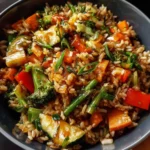
Ingredients
Scale
Here is everything you will need to create this vibrant and flavorful dish. The beauty of this recipe lies in its flexibility, so feel free to substitute vegetables based on what you have on hand.
For the Stir Fry:
- 3 Tablespoons High-Smoke-Point Oil: Use an oil like avocado, canola, or grapeseed oil, which can withstand the high heat of stir-frying without burning.
- 4 Cloves Garlic, Minced: This aromatic is the foundational flavor of any great stir fry, providing a pungent, savory depth.
- 1 Tablespoon Ginger, Freshly Grated: Adds a warm, zesty, and slightly spicy kick that brightens up all the other flavors.
- 1 Medium Yellow Onion, Diced: Creates a sweet and savory base layer of flavor as it cooks down.
- 2 Large Carrots, Thinly Sliced on a Bias: Slicing them on a diagonal (bias) not only looks beautiful but also increases the surface area for a quicker, more even cook.
- 1 Large Bell Pepper (Red, Yellow, or Orange), Seeded and Diced: Adds a sweet, crisp texture and a beautiful pop of color.
- 1 Head of Broccoli, Cut into Small Florets: These little trees are perfect for soaking up the delicious sauce and adding a dose of fiber and nutrients.
- 1 Cup Sliced Mushrooms (Cremini or Shiitake): Provide a wonderful, meaty texture and an earthy, umami flavor.
- 1/2 Cup Frozen or Fresh Peas: Add a burst of sweetness and a tender texture. If using frozen, there’s no need to thaw them first.
- 4 Cups Cooked and Chilled Rice: This is the most crucial ingredient. Day-old, cold rice is drier and firmer, which prevents the final dish from becoming mushy and allows the grains to fry up perfectly separate.
- 2 Large Eggs, Lightly Beaten: Creates soft, savory ribbons throughout the rice, adding protein and richness.
- 4 Green Onions, Thinly Sliced (whites and greens separated): The white parts are cooked with the aromatics for a mild onion flavor, while the green tops are used as a fresh garnish.
For the Savory Stir Fry Sauce:
- 1/3 Cup Low-Sodium Soy Sauce or Tamari: The primary source of salty, umami flavor. Use tamari for a gluten-free option.
- 2 Tablespoons Rice Vinegar: Adds a mild, tangy acidity that balances the saltiness of the soy sauce.
- 1 Tablespoon Sesame Oil: A finishing oil with a powerful, nutty aroma and flavor. It’s best added at the end, as its flavor can diminish with high heat.
- 1 Tablespoon Honey or Maple Syrup: Provides a touch of sweetness to balance the savory and tangy elements of the sauce.
- 1 Teaspoon Cornstarch: The secret to a perfectly glossy sauce that clings to every grain of rice and vegetable, rather than pooling at the bottom of the pan.
Instructions
Follow these steps carefully to achieve a restaurant-quality stir fry where every vegetable is perfectly tender-crisp and the rice is full of flavor. The key is to have all your ingredients prepped and ready to go before you start cooking.
- Prepare the Sauce: In a small bowl, whisk together all the sauce ingredients: low-sodium soy sauce, rice vinegar, sesame oil, honey (or maple syrup), and cornstarch. Continue whisking until the cornstarch is fully dissolved and the mixture is smooth. Set this bowl aside. This step is vital to do first, as the stir-frying process moves very quickly.
- Heat the Wok/Skillet: Place a large wok or a heavy-bottomed skillet over medium-high heat. Add 1 tablespoon of the high-smoke-point oil and swirl to coat the bottom. Let it heat up until the oil is shimmering slightly.
- Scramble the Eggs: Pour the lightly beaten eggs into the hot wok. Let them cook for about 30-60 seconds, gently scrambling them with a spatula until they are just set but still soft. Quickly remove the cooked eggs from the wok and set them aside on a plate.
- Sauté the Aromatics: Add another tablespoon of oil to the now-empty wok. Add the minced garlic, grated ginger, and the white parts of the green onions. Stir-fry constantly for about 30 seconds until they become incredibly fragrant. Be very careful not to let the garlic burn, as it will turn bitter.
- Cook the Hard Vegetables: Add the diced onion and sliced carrots to the wok. These are the hardest vegetables and require the longest cooking time. Stir-fry for 3-4 minutes, tossing frequently, until the carrots begin to soften but still have a slight bite.
- Add the Softer Vegetables: Now, add the broccoli florets, diced bell pepper, and sliced mushrooms to the wok. Continue to stir-fry for another 4-5 minutes. The bell peppers should be vibrant, the broccoli a bright green, and the mushrooms should have released some of their liquid and started to brown. The goal is tender-crisp, not mushy.
- Incorporate the Rice: Add the final tablespoon of oil to the wok, pushing the vegetables to the sides to make a space in the center. Add the 4 cups of cold, cooked rice to the middle of the wok. Use your spatula to break up any large clumps of rice. Let it sit for a minute to toast slightly before you begin tossing it with the vegetables.
- Combine and Sauce: Gently fold the vegetables into the rice, mixing everything together thoroughly. Pour the prepared sauce evenly over the entire mixture. Add the frozen peas at this stage. Continuously toss and stir everything for 2-3 minutes, ensuring every grain of rice and piece of vegetable is coated in the glossy sauce. The cornstarch in the sauce will thicken it as it heats.
- Final Touches: Turn off the heat. Fold the scrambled eggs back into the stir fry. Add the green tops of the sliced green onions. Give it one final, gentle toss to combine. Serve immediately.
Nutrition
- Serving Size: one normal portion
- Calories: 460