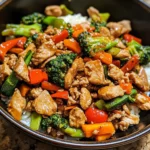
Ingredients
Scale
Here’s what you’ll need to create this vibrant and flavorful Turkey and Veggie Stir Fry. Each component plays a role in building layers of taste and texture for a perfectly balanced dish.
- 1 lb Boneless, Skinless Turkey Breast or Tenderloin: Cut into thin, bite-sized strips (about 1/4 inch thick). Using lean turkey breast keeps the dish light and healthy, providing excellent protein. Ensure it’s sliced against the grain for maximum tenderness. Alternatively, ground turkey can be used for a different texture.
- 1 tablespoon Cornstarch: Used to coat the turkey, creating a light, velvety texture and helping it brown beautifully while slightly thickening the sauce later.
- 1 tablespoon Soy Sauce (Low Sodium recommended): Part of the turkey marinade, adding savory depth (umami) right from the start. Low sodium helps control the saltiness.
- 1 tablespoon Sesame Oil (Toasted preferred): Divided use – half for the turkey marinade, adding a nutty aroma, and half reserved for finishing the dish or cooking. Toasted sesame oil has a much richer flavor than regular.
- 2 tablespoons High-Heat Cooking Oil: Such as avocado, canola, grapeseed, or peanut oil. Needed for stir-frying at high temperatures without smoking excessively. Olive oil is generally not recommended for high-heat stir-frying.
- 1 large Onion: Thinly sliced or roughly chopped. Forms the aromatic base of the stir-fry, providing a subtle sweetness when cooked. Yellow or white onions work well.
- 2–3 cloves Garlic: Minced finely. Essential for its pungent, savory flavor that permeates the entire dish. Fresh garlic is highly recommended over powder.
- 1 tablespoon Ginger: Freshly grated or minced. Adds a warm, zesty spice that cuts through the richness and brightens the flavors. Again, fresh ginger offers superior flavor.
- 1 large Red Bell Pepper: Stemmed, seeded, and cut into 1-inch pieces or thin strips. Adds sweetness, vibrant color, and a good dose of Vitamin C.
- 1 large Green Bell Pepper: Stemmed, seeded, and cut into 1-inch pieces or thin strips. Provides a slightly less sweet, more vegetal flavor contrast and more color.
- 1 large Carrot: Peeled and thinly sliced on the diagonal (or julienned). Adds crunch, sweetness, and color. Slicing thinly ensures it cooks quickly.
- 1 head Broccoli: Cut into small florets (about 1–1.5 inches). A stir-fry classic, adding earthy flavor, texture, and significant nutritional value. Make sure florets are similar in size for even cooking.
- 1/2 cup Snow Peas or Snap Peas: Trimmed. Add a delightful crispness, slight sweetness, and bright green color. They cook very quickly.
- Stir-Fry Sauce:
- 1/3 cup Low Sodium Chicken Broth or Vegetable Broth: Forms the liquid base of the sauce, adding flavor without excessive salt.
- 1/4 cup Low Sodium Soy Sauce: The primary savory and umami element of the sauce. Tamari can be used for a gluten-free option.
- 1 tablespoon Rice Vinegar: Adds a gentle tanginess that balances the savory and sweet notes. Apple cider vinegar can be a substitute in a pinch.
- 1 tablespoon Honey or Maple Syrup: Provides a touch of sweetness to balance the soy sauce and vinegar. Brown sugar can also be used. Adjust to your preference.
- 1 tablespoon Cornstarch: Mixed with a little cold water or broth (slurry) to thicken the sauce towards the end of cooking.
- 1 teaspoon Toasted Sesame Oil: Added at the end for its distinct nutty aroma and flavor.
- (Optional) 1/2 teaspoon Red Pepper Flakes or a dash of Sriracha: For those who enjoy a little heat. Add according to your spice tolerance.
- Optional Garnishes: Toasted sesame seeds, sliced green onions (scallions), chopped cilantro. These add freshness, texture, and visual appeal right before serving.
Instructions
Follow these steps carefully for a perfectly cooked, flavorful Turkey and Veggie Stir Fry. The key is high heat and quick cooking!
- Prepare the Turkey: Pat the turkey strips dry with paper towels (this helps them brown better). In a medium bowl, toss the turkey strips with 1 tablespoon of cornstarch, 1 tablespoon of soy sauce, and 1/2 tablespoon of toasted sesame oil. Mix well to ensure every piece is coated. Let it marinate for at least 10-15 minutes at room temperature while you prepare the vegetables and sauce. This brief marination adds flavor and helps tenderize the turkey.
- Prepare Vegetables & Aromatics: Wash, chop, and slice all your vegetables (onion, bell peppers, carrot, broccoli, snow peas) and aromatics (garlic, ginger). Keep them in separate piles or bowls near your cooking station (mise en place). This is crucial for stir-frying, as the cooking process is very fast. Having everything ready prevents burning. Ensure pieces are relatively uniform in size for even cooking.
- Mix the Stir-Fry Sauce: In a small bowl or liquid measuring cup, whisk together the chicken or vegetable broth, 1/4 cup low sodium soy sauce, rice vinegar, honey or maple syrup, and the remaining 1 teaspoon of toasted sesame oil. If using red pepper flakes or Sriracha, add them here. Set aside. In a separate tiny bowl, whisk the 1 tablespoon of cornstarch with 2 tablespoons of cold water or broth until smooth – this is your cornstarch slurry for thickening later. Mixing cornstarch with cold liquid prevents lumps.
- Preheat Your Wok or Pan: Place a large wok or heavy-bottomed skillet (cast iron works well) over high heat. Let it get properly hot – a drop of water should evaporate almost instantly. This high heat is essential for achieving the characteristic “wok hei” (breath of the wok) flavor and preventing steaming.
- Cook the Turkey: Add 1 tablespoon of the high-heat cooking oil to the hot wok. Swirl to coat the bottom. Carefully add the marinated turkey strips in a single layer, being careful not to overcrowd the pan (cook in batches if necessary). Let the turkey sear undisturbed for 1-2 minutes until nicely browned on one side. Then, stir-fry, tossing frequently, for another 2-4 minutes, or until the turkey is cooked through and opaque. Remove the cooked turkey from the wok with a slotted spoon and set aside on a clean plate.
- Stir-Fry the Harder Vegetables: Add the remaining 1 tablespoon of high-heat cooking oil to the wok (if needed). Add the onions and carrots. Stir-fry for 2-3 minutes until the onions start to soften and the carrots become slightly tender-crisp. Keep tossing constantly.
- Add Aromatics and Remaining Vegetables: Push the onions and carrots to the side of the wok. Add the minced garlic and grated ginger to the center and stir-fry for about 30 seconds until fragrant – be careful not to burn the garlic. Then, add the bell peppers and broccoli florets. Stir-fry everything together for another 3-5 minutes. The vegetables should be vibrant and tender-crisp, not mushy. If the pan seems too dry, you can add a tablespoon of water or broth to help steam the broccoli slightly.
- Add Softer Vegetables: Add the snow peas or snap peas to the wok. Stir-fry for just 1-2 minutes more. They cook very quickly and you want them to retain their bright color and snap.
- Combine and Sauce: Return the cooked turkey to the wok with the vegetables. Give the prepared stir-fry sauce a quick whisk (as the ingredients might have settled) and pour it over the turkey and vegetables. Bring the sauce to a simmer, tossing everything gently to coat.
- Thicken the Sauce: Give the cornstarch slurry another quick stir and pour it into the simmering sauce while stirring constantly. Continue to cook and stir for about 30 seconds to 1 minute, until the sauce thickens to your desired consistency, coating the turkey and vegetables nicely. Be mindful not to over-thicken; it should be glossy, not gloopy.
- Finish and Serve: Remove the wok from the heat. Stir in the remaining 1/2 tablespoon of toasted sesame oil, if desired, for an extra burst of nutty aroma. Taste and adjust seasoning if necessary (more soy sauce for saltiness, a touch more honey for sweetness, or vinegar for tang). Serve immediately over your choice of base (like rice or noodles), garnished with toasted sesame seeds, sliced green onions, or cilantro, if using.
Nutrition
- Serving Size: one normal portion
- Calories: 450
- Sodium: 800mg
- Fiber: 8g
- Protein: 35g