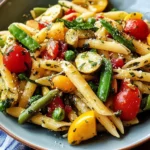
Ingredients
This recipe thrives on fresh, seasonal vegetables. Don’t be afraid to adapt it based on what’s available at your local farmers market or grocery store. Here’s what you’ll need to create this delightful dish:
- Pasta: 1 pound of your favorite pasta shape, such as penne, farfalle (bow-tie), fusilli, or orecchiette. Choose a pasta with ridges or shapes that will capture the delicious sauce and vegetable pieces.
- Asparagus: 1 pound, trimmed and cut into 1-inch pieces. Asparagus brings a delicate, slightly grassy flavor and a beautiful green hue that screams springtime.
- Peas: 1 cup of fresh or frozen peas. Sweet peas add a pop of sweetness and vibrant green color. If using frozen, thaw them before adding to the pasta.
- Sugar Snap Peas: 1 cup, trimmed and halved or left whole if small. Sugar snap peas offer a delightful crunch and a hint of sweetness, adding textural complexity.
- Zucchini: 1 medium, diced. Zucchini’s mild flavor and soft texture make it a versatile addition, absorbing the flavors of the sauce beautifully.
- Yellow Bell Pepper: 1 medium, seeded and diced. Yellow bell pepper contributes a sweet, slightly fruity flavor and a cheerful yellow color to the dish.
- Cherry Tomatoes: 1 pint, halved. Cherry tomatoes burst with juicy sweetness and acidity, adding a bright counterpoint to the other vegetables.
- Garlic: 3-4 cloves, minced. Garlic provides a pungent, aromatic base note that enhances the flavors of all the vegetables and the sauce.
- Shallot: 1 medium, finely chopped (optional, but recommended). Shallot adds a milder, sweeter onion flavor compared to regular onions, complementing the delicate spring vegetables.
- Fresh Lemon: 1-2 lemons, zested and juiced. Lemon zest and juice provide a crucial bright, citrusy note that lightens the sauce and enhances the overall freshness.
- Dry White Wine: ½ cup (such as Pinot Grigio or Sauvignon Blanc). White wine adds depth of flavor and acidity to the sauce. Vegetable broth can be substituted for an alcohol-free version.
- Vegetable Broth: ½ cup. Vegetable broth provides moisture and helps to create a light, flavorful sauce.
- Heavy Cream or Crème Fraîche: ½ cup (or for a lighter option, use half-and-half or even milk, though the sauce will be less rich). Cream adds richness and body to the sauce, creating a luxurious texture that coats the pasta and vegetables. For a vegan option, consider using cashew cream or full-fat coconut milk.
- Fresh Basil: ¼ cup, chopped. Fresh basil brings a sweet, peppery, and slightly minty aroma that is quintessential to Italian cuisine and perfectly complements the spring vegetables.
- Fresh Parsley: ¼ cup, chopped. Fresh parsley adds a clean, slightly peppery, and fresh herbaceous note, balancing the richer flavors and adding brightness.
- Parmesan Cheese: ½ cup, grated (plus extra for serving, optional). Parmesan cheese adds a salty, umami-rich flavor that enhances the overall savory taste of the dish. For a vegan option, use nutritional yeast or vegan parmesan.
- Olive Oil: ¼ cup, extra virgin. Olive oil is essential for sautéing the vegetables and adding richness and flavor to the sauce.
- Butter: 2 tablespoons, unsalted (optional, but adds richness). Butter, used in conjunction with olive oil, provides a richer flavor and helps to create a silky sauce. For a vegan option, use vegan butter or simply increase the olive oil.
- Salt and Black Pepper: To taste. Seasoning is crucial to bring out the flavors of all the ingredients.
- Red Pepper Flakes: Pinch (optional, for a touch of heat). Red pepper flakes add a subtle warmth and complexity, especially if you enjoy a hint of spice.
Instructions
Follow these simple steps to create a vibrant and flavorful Springtime Veggie Pasta Primavera that will impress your family and friends.
- Cook the Pasta: Bring a large pot of salted water to a rolling boil. Add the pasta and cook according to package directions until al dente. “Al dente” means “to the tooth” – the pasta should be cooked through but still have a slight firmness in the center. This prevents it from becoming mushy when combined with the sauce and vegetables. Reserve about 1 cup of pasta water before draining. The starchy pasta water is a secret weapon for creating a silky, emulsified sauce that beautifully coats the pasta. Drain the pasta and set aside.
- Prepare the Vegetables: While the pasta is cooking, prepare all your vegetables. Wash and dry them thoroughly. Trim the asparagus and cut it into 1-inch pieces. Trim the sugar snap peas and halve or leave whole if small. Dice the zucchini and yellow bell pepper. Halve the cherry tomatoes. Mince the garlic and finely chop the shallot (if using). Having all your vegetables prepped and ready to go ensures a smooth and efficient cooking process.
- Sauté Aromatics: In a large, deep skillet or pot, heat olive oil and butter (if using) over medium heat. Add the minced garlic and chopped shallot (if using) and sauté for 1-2 minutes, until fragrant but not browned. Be careful not to burn the garlic, as it will become bitter. Sautéing the aromatics first releases their flavors and creates a flavorful base for the sauce.
- Cook the Heartier Vegetables: Add the asparagus, sugar snap peas, and yellow bell pepper to the skillet. Sauté for 3-5 minutes, until they are crisp-tender. Crisp-tender vegetables retain a slight bite and vibrant color, providing textural contrast and visual appeal to the dish. Avoid overcooking them, as they will become mushy.
- Add the Softer Vegetables and Wine: Add the diced zucchini and halved cherry tomatoes to the skillet. Cook for another 2-3 minutes, until the zucchini is slightly softened and the tomatoes are just beginning to soften and release their juices. Pour in the dry white wine (or vegetable broth). Let it simmer for 1-2 minutes, allowing the alcohol to cook off and the flavors to meld. The wine adds depth and complexity to the sauce, deglazing the pan and lifting any flavorful bits that may have stuck to the bottom.
- Create the Sauce: Stir in the vegetable broth and heavy cream (or crème fraîche/milk). Bring to a gentle simmer and cook for 2-3 minutes, or until the sauce has slightly thickened. The cream adds richness and body to the sauce, while the vegetable broth provides moisture and flavor. Simmering allows the sauce to reduce slightly and the flavors to concentrate.
- Incorporate the Peas and Lemon: Stir in the peas (fresh or thawed frozen), lemon zest, and lemon juice. Cook for another minute or two, just until the peas are heated through. Add the chopped fresh basil and parsley. The peas add a final pop of sweetness and color, while the lemon zest and juice provide brightness and acidity, balancing the richness of the sauce. Fresh herbs add a burst of aroma and freshness.
- Combine Pasta and Sauce: Add the cooked pasta to the skillet with the vegetable sauce. Toss gently to coat the pasta and vegetables evenly with the sauce. If the sauce seems too thick, add a splash of the reserved pasta water to reach your desired consistency. The pasta water helps to emulsify the sauce, creating a silky, clingy texture that coats the pasta perfectly.
- Add Parmesan and Season: Stir in the grated Parmesan cheese (or nutritional yeast/vegan parmesan). Toss again to combine. Season with salt and black pepper to taste. Add a pinch of red pepper flakes if desired for a touch of heat. Taste and adjust seasonings as needed. Parmesan cheese adds a salty, savory element, while salt and pepper enhance all the flavors. Seasoning is crucial to bring out the best in the dish.
- Serve Immediately: Serve the Springtime Veggie Pasta Primavera immediately, garnished with extra grated Parmesan cheese and fresh basil or parsley, if desired. This dish is best enjoyed fresh, while the vegetables are still crisp-tender and the sauce is creamy and vibrant.
Nutrition
- Serving Size: one normal portion
- Calories: 550
- Protein: 20g