Ingredients
- Beef Short Ribs (3-4 lbs): The star of the show! Choose bone-in short ribs, preferably English cut for maximum flavor and meatiness. Marbling is key for tender, juicy results after slow braising.
- Olive Oil (3 tablespoons): Used for searing the short ribs and sautéing the vegetables, olive oil provides a good base flavor and heat tolerance.
- Yellow Onion (2 large, chopped): Forms the aromatic foundation of the braising liquid, adding sweetness and depth.
- Carrots (3 large, chopped): Contribute sweetness, color, and body to the sauce. They become melt-in-your-mouth tender during braising.
- Celery (3 stalks, chopped): Adds a savory, slightly peppery note to the braising base, balancing the sweetness of onions and carrots.
- Garlic (4 cloves, minced): Essential for adding pungent, aromatic flavor to the dish. Minced garlic infuses the braising liquid beautifully.
- Tomato Paste (2 tablespoons): Adds umami richness and depth of flavor. It also helps to thicken and deepen the color of the braising sauce.
- Dry Red Wine (1 bottle, 750ml): A crucial component for braising. Red wine tenderizes the beef, adds complex flavors, and creates a luxurious sauce. Choose a robust red like Cabernet Sauvignon, Merlot, or a Chianti.
- Beef Broth (4 cups): Provides the liquid for braising and enhances the beefy flavor. Opt for low-sodium beef broth to control the salt level.
- Fresh Thyme Sprigs (4-5): Infuses a subtle, earthy, and slightly floral aroma into the braising liquid. Thyme pairs beautifully with beef.
- Fresh Rosemary Sprigs (2-3): Adds a piney, robust, and aromatic flavor that complements the beef and red wine. Rosemary is a classic herb for braising.
- Bay Leaves (2): Contribute a subtle, tea-like flavor to the braising liquid, adding complexity and depth.
- All-Purpose Flour (2 tablespoons): Used for dredging the short ribs, creating a flavorful crust when seared and helping to thicken the braising sauce.
- Salt and Black Pepper: Essential seasonings to enhance all the flavors in the dish. Use kosher salt for better flavor and texture. Freshly ground black pepper is always preferred.
Instructions
- Prepare the Short Ribs: Pat the beef short ribs dry with paper towels. This is crucial for achieving a good sear. Season generously on all sides with salt and freshly ground black pepper. Dredge each short rib in all-purpose flour, shaking off any excess. The flour coating will help create a beautiful crust when searing and contribute to thickening the braising sauce later.
- Sear the Short Ribs: Heat olive oil in a large, heavy-bottomed pot or Dutch oven over medium-high heat. Once the oil is shimmering hot, carefully add the short ribs to the pot in a single layer, being careful not to overcrowd. You may need to work in batches. Sear the ribs on all sides until they are deeply browned and caramelized, about 2-3 minutes per side. This searing process is vital for developing rich, deep flavor in the final dish. Remove the seared short ribs from the pot and set aside.
- Sauté the Vegetables: Reduce the heat to medium. Add the chopped onions, carrots, and celery to the pot. Sauté the vegetables, stirring occasionally, until they are softened and slightly caramelized, about 8-10 minutes. As they cook, they will release their natural sugars and flavors, building a flavorful base for the braise.
- Add Garlic and Tomato Paste: Add the minced garlic to the pot and cook for another minute until fragrant, being careful not to burn it. Stir in the tomato paste and cook for 2-3 minutes, stirring constantly. Cooking the tomato paste deepens its flavor and removes any raw taste.
- Deglaze the Pot: Pour in the dry red wine, scraping up any browned bits from the bottom of the pot with a wooden spoon or spatula. These browned bits, called “fond,” are packed with flavor and will add depth to the sauce. Bring the wine to a simmer and let it reduce slightly for about 5 minutes, allowing the alcohol to evaporate and the flavors to concentrate.
- Add Broth and Herbs: Pour in the beef broth. Add the thyme sprigs, rosemary sprigs, and bay leaves. Stir everything together to combine.
- Braise the Short Ribs: Return the seared short ribs to the pot, nestling them into the braising liquid. The liquid should come about halfway up the sides of the ribs; if needed, add a little more beef broth or red wine to reach this level. Bring the liquid to a gentle simmer, then cover the pot tightly with a lid.
- Slow Braise in the Oven: Transfer the pot to a preheated oven at 325°F (160°C). Braise the short ribs for 3-3.5 hours, or until the meat is incredibly tender and easily pulls away from the bone. Check the ribs after 3 hours; they should be fork-tender. If not, continue braising for another 30 minutes. The long, slow braising process is what transforms tough short ribs into melt-in-your-mouth perfection.
- Shred the Beef (Optional) and Reduce the Sauce: Once the short ribs are tender, carefully remove them from the pot and set aside. If desired, shred the beef from the bones using two forks. Skim off any excess fat from the surface of the braising liquid in the pot. Place the pot on the stovetop over medium-high heat and bring the sauce to a simmer. Let the sauce reduce and thicken, uncovered, for about 15-20 minutes, or until it reaches your desired consistency. Taste and adjust seasoning with salt and pepper as needed. For a smoother sauce, you can strain it through a fine-mesh sieve, discarding the solids, or use an immersion blender to blend the vegetables directly into the sauce for a rustic texture.
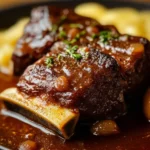
- Return Short Ribs to Sauce and Serve: Return the short ribs (or shredded beef) to the pot with the reduced sauce. Gently reheat the ribs in the sauce if needed. Serve the Slow Braised Easter Beef Short Ribs hot, spooning plenty of the rich sauce over each serving. Garnish with fresh parsley or thyme, if desired.
Nutrition
- Serving Size: one normal portion
- Calories: 750
- Protein: 55g