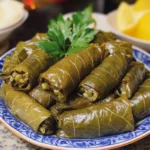
Ingredients
Here is everything you will need to create these delightful and healthy Mediterranean morsels. Each component plays a crucial role in building layers of flavor and texture.
- 1 jar (16 ounces) grape leaves in brine: These are the essential wrappers for our filling. Look for jars with whole, pliable leaves for the best rolling experience.
- 1 ½ cups long-grain white rice: Uncooked. This type of rice works perfectly as it cooks to a fluffy texture inside the leaves, absorbing all the delicious flavors of the cooking liquid.
- 2 large yellow onions, finely diced: They create a sweet, aromatic foundation for the filling when sautéed.
- 1 cup fresh parsley, finely chopped: Provides a bright, fresh, and slightly peppery taste that is classic in Mediterranean cuisine.
- 1 cup fresh dill, finely chopped: This is a star ingredient, lending a distinct, slightly tangy, and aromatic flavor that is synonymous with authentic grape leaves.
- ½ cup fresh mint, finely chopped: Adds a cool, refreshing undertone that balances the richness of the olive oil and the earthiness of the leaves.
- 4 cloves garlic, minced: Adds a pungent, savory depth to both the filling and the cooking liquid.
- ½ cup extra virgin olive oil, divided: A high-quality olive oil is non-negotiable. Half is used for sautéing the filling, and the other half enriches the cooking liquid and is used for serving.
- ⅓ cup fresh lemon juice, divided: Provides essential acidity and brightness. It tenderizes the leaves during cooking and adds a zesty finish.
- 1 teaspoon sea salt: To season the filling and bring all the flavors together.
- ½ teaspoon black pepper: For a touch of gentle spice.
- 3 cups vegetable broth or water: This will be the simmering liquid that cooks the rice and infuses the grape leaves with moisture and flavor.
- 2–3 thin slices of potato or tomato (optional): These are placed at the bottom of the pot to prevent the grape leaves from sticking or burning.
Instructions
Follow these detailed steps carefully to ensure your veggie-stuffed grape leaves are perfectly rolled, beautifully cooked, and bursting with flavor. The process can be broken down into three main stages: preparing the components, rolling the leaves, and simmering to perfection.
Step 1: Prepare the Grape Leaves and Rice
First, address the grape leaves. Open the jar and carefully remove the roll of leaves. Place them in a large bowl and cover them with hot water. Let them soak for about 15-20 minutes. This step is crucial for rinsing off the excess brine and making the leaves more pliable and easier to work with. After soaking, gently separate the leaves and rinse them one by one under cool running water. Handle them with care to avoid tearing. Place them in a colander to drain and set aside. Identify and set aside any torn or very small leaves; these can be used to line the bottom of your cooking pot.
While the leaves are soaking, prepare the rice. Place the 1 ½ cups of uncooked long-grain white rice in a fine-mesh sieve and rinse it under cold water until the water runs clear. This removes excess starch, which helps the filling become fluffy rather than gummy. Let the rice drain well.
Step 2: Create the Aromatic Filling
In a large, heavy-bottomed skillet or pot, heat ¼ cup of the extra virgin olive oil over medium heat. Once the oil shimmers, add the finely diced yellow onions. Sauté for 6-8 minutes, stirring occasionally, until the onions are soft, translucent, and have a hint of sweetness. Add the 4 minced garlic cloves and cook for another minute until fragrant, being careful not to let the garlic brown.
Turn off the heat. Add the rinsed and drained rice to the skillet with the onions and garlic. Stir everything together well. Now, add the finely chopped fresh parsley, dill, and mint. Mix thoroughly to combine all the fresh herbs with the rice and onion mixture. Season generously with 1 teaspoon of sea salt and ½ teaspoon of black pepper. Finally, stir in 2 tablespoons of the fresh lemon juice. Give the filling one last good stir. At this point, the filling is not cooked through; the rice will cook fully inside the grape leaves as they simmer.
Step 3: The Art of Rolling the Grape Leaves
This is the most hands-on part of the process, but it quickly becomes a rhythmic and enjoyable task. Set up your rolling station: have your bowl of drained grape leaves, your bowl of filling, and your cooking pot nearby.
To prepare the pot, take any torn or small grape leaves you set aside and use them to line the bottom. Alternatively, you can use thin slices of potato or tomato. This protective layer prevents the delicate stuffed leaves from scorching on the bottom of the pot.
Take one grape leaf and lay it on a clean, flat surface with the shiny side down and the dull, veiny side facing up. The stem should be pointing towards you. Place about 1 to 1 ½ teaspoons of the rice filling in a small log shape at the wide base of the leaf, just above the stem area. Be careful not to overfill, as the rice will expand during cooking. An overstuffed leaf is prone to bursting.
To roll, first, fold the bottom of the leaf up and over the filling, tucking it in snugly. Then, fold the right side of the leaf in towards the center. Follow by folding the left side in towards the center, creating an envelope shape. Finally, starting from the bottom, roll the entire parcel upwards towards the tip of the leaf, creating a small, tight cigar-like roll. It should be snug but not so tight that the rice has no room to expand. Repeat this process with the remaining leaves and filling.
Step 4: Arranging and Simmering to Perfection
As you finish rolling each grape leaf, place it seam-side down in your prepared pot. Arrange them in tight, concentric circles, packing them closely together. This snug fit is important as it helps prevent the rolls from unraveling while they cook. Once you have a complete layer, you can start a second layer on top of the first.
Once all the rolled leaves are nestled in the pot, pour the remaining ¼ cup of extra virgin olive oil and the remaining lemon juice over them. Then, pour in the 3 cups of vegetable broth or water. The liquid should come about halfway up the pile of grape leaves.
To keep the rolls submerged and prevent them from floating and unrolling, place a small, heatproof plate or saucer upside down directly on top of them. This is a crucial traditional technique that guarantees perfectly shaped results.
Bring the liquid to a gentle boil over medium-high heat. Once it’s boiling, immediately reduce the heat to the lowest possible setting, cover the pot with a tight-fitting lid, and let it simmer very gently for 45-60 minutes. The cooking is complete when the grape leaves are tender and the rice filling is fully cooked. You can test one from the top layer to check for doneness.
Step 5: Resting and Serving
Once cooked, remove the pot from the heat but leave the lid on. Let the veggie-stuffed grape leaves rest and cool in the pot for at least 30 minutes, or ideally, until they reach room temperature. This resting period allows them to absorb any remaining liquid and helps the flavors to meld and intensify. They are even better after they have been chilled in the refrigerator for a few hours or overnight.
To serve, carefully remove the plate and transfer the stuffed grape leaves to a platter. Drizzle with a little extra high-quality olive oil and serve with fresh lemon wedges for squeezing.
Nutrition
- Serving Size: one normal portion
- Calories: 250