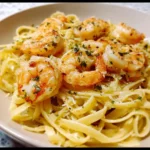
Ingredients
Here is the simple list of components you’ll need to create this stunning pasta dish. The quality of these few ingredients will directly impact the final flavor, so choose the best you can.
- Linguine or Spaghetti (1 pound / 450g): A long pasta is traditional and ideal for catching the light, buttery sauce. Linguine offers a slightly wider surface area, while spaghetti is a classic choice.
- Large Shrimp (1.5 pounds / 680g): Peeled and deveined. Use fresh or frozen (and thawed) shrimp. Large or jumbo shrimp work best as they remain juicy and are less likely to overcook.
- Unsalted Butter (1/2 cup / 1 stick / 113g): This is the rich, decadent heart of the sauce. Using unsalted butter allows you to control the final saltiness of the dish.
- Extra Virgin Olive Oil (1/4 cup / 60ml): Used alongside the butter, it adds a fruity depth of flavor and helps prevent the butter from browning too quickly.
- Garlic (8-10 cloves): Freshly minced or very thinly sliced. This is a primary flavor, so don’t be shy! The amount can be adjusted to your personal preference, but 8 cloves is a great starting point for a robust garlic flavor.
- Dry White Wine (1/2 cup / 120ml): A crisp wine like Sauvignon Blanc or Pinot Grigio is perfect. It deglazes the pan, adding a complex acidity that cuts through the richness of the butter. If you prefer not to use alcohol, you can substitute with chicken or vegetable broth.
- Lemon (1 whole): You will use both the juice and the zest. The zest provides a fragrant citrus aroma, while the juice adds a bright, fresh finish that lifts all the flavors.
- Red Pepper Flakes (1/2 teaspoon): This is optional but highly recommended for a gentle background heat that beautifully contrasts the rich sauce. Adjust the amount based on your spice tolerance.
- Fresh Parsley (1/2 cup): Finely chopped. It adds a fresh, herbaceous note and a vibrant splash of color to the finished dish.
- Salt and Black Pepper: To taste. You’ll need salt for the pasta water and for seasoning the final dish. Freshly ground black pepper is always best.
Instructions
Follow these steps carefully to ensure your pasta is perfectly cooked, your shrimp are tender and juicy, and your sauce is balanced and delicious. The key is to have all your ingredients prepped and ready to go, as the cooking process moves very quickly.
Step 1: Prepare the Pasta
Bring a large pot of water to a rolling boil. Once boiling, generously salt the water—it should taste like the sea. This is the only opportunity you have to season the pasta itself. Add the linguine or spaghetti and cook according to the package directions until it reaches al dente. This means it should still have a slight, firm bite in the center. Before draining the pasta, carefully reserve about 1.5 cups of the starchy pasta water. This liquid gold is crucial for creating a silky, emulsified sauce. Drain the pasta in a colander and set it aside.
Step 2: Sauté the Aromatics
While the pasta is cooking, place a large skillet or sauté pan over medium heat. Add the olive oil and butter. Allow the butter to melt completely, swirling the pan to combine it with the oil. Once the butter is melted and starts to foam gently, add the minced garlic and red pepper flakes. Sauté for about 60-90 seconds, stirring constantly. The goal is to cook the raw edge off the garlic and make it incredibly fragrant, not to brown it. Browned garlic will taste bitter and ruin the sauce. Your kitchen should be filled with an amazing garlic aroma at this point.
Step 3: Cook the Shrimp
Increase the heat to medium-high. Add the peeled and deveined shrimp to the skillet in a single layer. It’s important not to overcrowd the pan, so work in batches if necessary. Season the shrimp generously with salt and freshly ground black pepper. Cook the shrimp for 1-2 minutes per side. You’ll know they’re ready when they turn pink and opaque and curl into a “C” shape. An overcooked shrimp will curl into a tight “O” and become rubbery, so watch them closely. Remove the cooked shrimp from the pan and set them aside on a plate.
Step 4: Create the Sauce
Pour the dry white wine (or broth) into the hot skillet. As it sizzles, use a wooden spoon or spatula to scrape up any browned bits (known as fond) from the bottom of the pan. These bits are packed with flavor. Let the wine simmer and reduce by about half, which should only take 2-3 minutes. This cooks off the alcohol taste and concentrates the flavor.
Step 5: Bring It All Together
Reduce the heat to low. Add the reserved pasta water (start with 1 cup), the juice of half a lemon, and the lemon zest to the skillet. Stir vigorously to combine everything. The starches in the pasta water will help to emulsify the butter and wine, creating a smooth, cohesive sauce rather than an oily one. Add the drained pasta directly into the skillet with the sauce. Use tongs to toss everything together thoroughly, ensuring every strand of pasta is coated in the glorious garlic butter sauce.
Step 6: Final Touches
Return the cooked shrimp to the pan along with the chopped fresh parsley. Toss everything together one last time to warm the shrimp through and distribute the parsley. Taste the pasta and adjust the seasoning as needed. You may want to add more salt, pepper, a squeeze of the remaining lemon juice for brightness, or another pinch of red pepper flakes for heat. Serve immediately.
Nutrition
- Serving Size: one normal portion
- Calories: 550
- Sodium: 600mg
- Fat: 22g
- Carbohydrates: 55g
- Protein: 30g