Ingredients
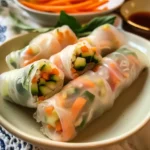
Here’s what you’ll need to create these vibrant and flavorful Rice Paper Veggie Rolls. Remember, the beauty of this recipe is its flexibility, so feel free to adjust the vegetables and sauces to your liking!
- Rice Paper Wrappers: These thin, translucent sheets are the foundation of our rolls. Look for circular or square wrappers, typically made from rice flour, tapioca flour, and water. They are readily available in most grocery stores in the Asian food aisle. They provide a delicate, slightly chewy texture when softened.
- Rice Vermicelli Noodles: Thin rice noodles, also known as ‘bun’ in Vietnamese cuisine, are a classic filling. These noodles are light and absorb flavors beautifully. They require a quick soak in hot water to become tender and are essential for adding substance to the rolls without being heavy.
- Fresh Lettuce: Crisp lettuce leaves, such as romaine or butter lettuce, provide a refreshing crunch and a base layer for the fillings. They add volume and a cooling element that balances the other ingredients.
- Julienned Carrots: Thinly sliced carrots, cut into matchsticks or using a julienne peeler, offer sweetness and a vibrant color. Carrots add a satisfying crunch and are packed with vitamins.
- Sliced Cucumbers: Cool and refreshing, cucumber slices contribute a mild flavor and crisp texture. English cucumbers or Persian cucumbers work well, as they have fewer seeds.
- Bell Peppers (various colors): Sliced bell peppers, in colors like red, yellow, or orange, bring a sweet and slightly tangy flavor. They add a vibrant color and a satisfying crispness, along with essential vitamins.
- Fresh Mint Leaves: Aromatic mint leaves provide a burst of freshness and a cooling sensation. Mint is crucial for that signature ‘fresh spring roll’ flavor and adds a layer of complexity.
- Fresh Cilantro (Coriander) Leaves: Cilantro adds a bright, citrusy, and slightly peppery note. It’s a key herb in many Asian cuisines and complements the other flavors perfectly. If you are not a fan of cilantro, you can substitute with Thai basil.
- Avocado (optional): Creamy avocado slices add richness and healthy fats to the rolls. Avocado enhances the texture and provides a smooth, buttery element.
- Bean Sprouts (optional): Crisp bean sprouts offer a subtle nutty flavor and extra crunch. They are a classic addition to spring rolls and add a light, refreshing element.
- Dipping Sauce Ingredients (for Peanut Sauce – example):
- Peanut Butter: Creamy or crunchy peanut butter forms the base of this classic dipping sauce. Use natural peanut butter for a healthier option.
- Hoisin Sauce: A sweet and savory sauce that adds depth and umami flavor. Hoisin sauce is a key ingredient for authentic peanut sauce.
- Soy Sauce (or Tamari for gluten-free): Adds saltiness and enhances the overall flavor profile. Use low-sodium soy sauce to control the salt content.
- Rice Vinegar: Provides a tangy and slightly sweet counterpoint to the richness of the peanut butter.
- Honey or Maple Syrup (for vegan): Sweetens the sauce and balances the other flavors. Adjust the amount to your desired sweetness.
- Sesame Oil: Adds a nutty aroma and flavor, enhancing the complexity of the sauce.
- Water (or Coconut Milk for creaminess): Thins the sauce to the desired consistency. Coconut milk adds extra richness and flavor.
- Lime Juice: Fresh lime juice brightens the sauce and adds a zesty touch.
- Optional: Sriracha or Chili Garlic Sauce: For a spicy kick, add a dash of your favorite chili sauce.
Instructions
Follow these detailed instructions to create perfect Rice Paper Veggie Rolls every time. Don’t be intimidated; with a little practice, you’ll be rolling like a pro!
- Prepare the Vegetables: Begin by thoroughly washing all your chosen vegetables. This is a crucial step to ensure freshness and hygiene. For the carrots and cucumbers, peel them if desired (though peeling is optional, especially for organic produce). Now, get ready to cut them into thin, manageable strips. The ideal cut is julienne – think matchsticks – as this makes them easy to roll and bite into. You can achieve this with a sharp knife, a mandoline with a julienne blade, or a julienne peeler. Slice the bell peppers into thin strips as well, removing the seeds and membranes first. For the lettuce, wash and gently pat dry the leaves. You can keep them whole or tear them into slightly smaller, more roll-friendly pieces. Set all your beautifully prepared vegetables aside in separate bowls, ready for assembly.
- Cook the Rice Vermicelli Noodles: Rice vermicelli noodles are very quick to prepare. Bring a pot of water to a boil. Once boiling, remove the pot from the heat – this is important, as boiling the noodles directly can make them mushy. Add the rice vermicelli noodles to the hot water. Let them soak for about 5-7 minutes, or according to the package instructions, until they are tender but still slightly firm – al dente. You don’t want them to be overly soft. While they are soaking, stir them gently a couple of times to prevent sticking. Once they are cooked to your liking, drain them immediately in a colander and rinse them under cold running water. This stops the cooking process and prevents them from becoming sticky. Set the cooked noodles aside, allowing any excess water to drain off. If you are preparing them ahead of time, you can toss them lightly with a tiny bit of sesame oil to prevent them from sticking together.
- Prepare Your Dipping Sauce (Peanut Sauce Example): While the noodles are soaking, it’s the perfect time to whip up your dipping sauce. For a classic peanut sauce, grab a medium-sized bowl. Add your peanut butter to the bowl – creamy or crunchy, depending on your preference. Then, add the hoisin sauce, soy sauce (or tamari for gluten-free), rice vinegar, honey or maple syrup (for vegan), and sesame oil. If you like a bit of heat, now is the time to add a dash of sriracha or chili garlic sauce. Start with a small amount and taste as you go. Now, gradually add water (or coconut milk for a richer sauce), a tablespoon at a time, whisking continuously until you reach your desired consistency. You want it to be thick enough to coat the rolls but thin enough to dip easily. Finally, squeeze in the fresh lime juice. Taste the sauce and adjust seasonings as needed. Perhaps you want a bit more sweetness, tanginess, saltiness, or spice. Once it’s perfect, set the dipping sauce aside. You can prepare it ahead of time and store it in the refrigerator until you are ready to serve.
- Soften the Rice Paper Wrappers: This step requires a bit of technique but is easy once you get the hang of it. Fill a shallow dish or a large plate with warm water. The water should be warm enough to soften the rice paper but not so hot that it cooks it or makes it too sticky to handle. Have your prepared vegetables, noodles, and a clean, damp kitchen towel ready to go. Take one rice paper wrapper at a time. Submerge it completely in the warm water for just a few seconds – usually 5-10 seconds is enough. You want it to become pliable but not mushy. Over-soaking is a common mistake and will make the rice paper very difficult to handle and prone to tearing. Once softened, carefully lift the rice paper wrapper out of the water, letting any excess water drip off. Lay it flat on your damp kitchen towel or a clean, smooth surface like a cutting board. The damp towel helps prevent the rice paper from sticking to the surface and makes it easier to work with.
- Assemble the Veggie Rolls: Now for the fun part – assembling your rolls! Working quickly while the rice paper is still pliable, arrange your chosen fillings on the bottom third of the rice paper wrapper, closer to you. Start with a layer of lettuce, then add a small portion of rice vermicelli noodles, followed by julienned carrots, cucumber slices, bell pepper strips, and any other vegetables you are using, like bean sprouts or avocado. Don’t overfill the rolls, as this will make them difficult to roll and they might tear. Aim for a neat and compact pile of fillings. Once you have your fillings arranged, begin rolling. Start by folding the bottom edge of the rice paper wrapper over the fillings, tucking it in snugly. Then, fold in both sides of the wrapper towards the center, like you are wrapping a burrito. Finally, continue rolling upwards and tightly until you have a complete roll. Place the finished roll seam-down on a serving platter. Repeat the process with the remaining rice paper wrappers and fillings until you have used up all your ingredients or made as many rolls as you desire.
- Serve and Enjoy Immediately: Rice Paper Veggie Rolls are best enjoyed fresh, right after they are made. Arrange them beautifully on a platter, perhaps garnished with some extra fresh herbs or sesame seeds. Serve them immediately with your prepared dipping sauce (peanut sauce, sweet chili sauce, or any other sauce you prefer) on the side. Encourage everyone to dip their rolls generously and enjoy the burst of fresh flavors and textures. If you are not serving them immediately, see the storage tips in the ‘Additional Tips’ section to keep them as fresh as possible.
Nutrition
- Serving Size: one normal portion
- Calories: 350
- Fat: 15g