Ingredients
Scale
Here are the components you’ll need to build these beautiful and delicious veggie sushi stacks. Each ingredient is chosen for its specific flavor and texture to create a harmonious and satisfying bite.
For the Seasoned Sushi Rice
- 1 ½ cups Japanese short-grain rice (sushi rice): This is the foundation. Its high starch content is essential for creating the sticky texture that holds the stack together.
- 2 cups water: For cooking the rice to the perfect fluffy, yet firm consistency.
- ¼ cup rice vinegar: This provides the signature tangy and slightly sweet flavor profile of authentic sushi rice. Do not substitute with other vinegars.
- 2 tablespoons granulated sugar: Balances the tartness of the vinegar and enhances the overall flavor of the rice.
- 1 teaspoon salt: A crucial element that brings out all the other flavors in the rice seasoning.
For the Vibrant Veggie Layer
- 1 large English cucumber: Choose an English or seedless cucumber for a crisp, refreshing crunch without excess water.
- 1 large, firm-but-ripe avocado: Provides a creamy, rich texture and healthy fats that contrast beautifully with the crisp vegetables.
- 1 cup shelled edamame, cooked and cooled: These offer a wonderful pop of color, a slightly firm bite, and a boost of plant-based protein.
- 2 scallions, finely sliced: Adds a mild, fresh oniony bite that cuts through the richness of the avocado.
- 1 tablespoon soy sauce or tamari: To lightly season the vegetable mixture and add a savory, umami depth.
For the Spicy Mayo Drizzle
- ½ cup high-quality mayonnaise (Japanese Kewpie mayo is recommended): Kewpie mayo is richer and creamier than its American counterpart, made with only egg yolks, giving the sauce an unparalleled flavor.
- 2 tablespoons sriracha (or more, to taste): The star of the sauce, providing a warm, garlicky heat. Adjust the amount based on your personal spice preference.
- 1 teaspoon toasted sesame oil: Lends a deep, nutty, and aromatic fragrance that is quintessential in many Asian dishes.
For Garnish and Assembly
- 2 sheets of nori (roasted seaweed), cut into thin strips (chiffonade): Adds a classic, savory, and slightly oceanic flavor of traditional sushi.
- 2 tablespoons toasted sesame seeds (a mix of black and white is visually appealing): For a nutty flavor and a delightful textural crunch.
- Furikake seasoning (optional): A Japanese multi-purpose seasoning typically made of sesame seeds, chopped seaweed, sugar, and salt. It’s a fantastic flavor booster.
- Pickled ginger and wasabi: To serve alongside for that authentic sushi bar experience.
Instructions
Follow these detailed steps to create flawless sushi stacks every time. The key is in the preparation of each component before assembly.
Step 1: Prepare the Perfect Sushi Rice
- Rinse the Rice: Place the sushi rice in a fine-mesh sieve. Rinse it under cold running water, swirling the rice with your hand, until the water runs clear. This process removes excess surface starch and is crucial for preventing gummy rice. Drain thoroughly.
- Cook the Rice: Combine the rinsed rice and 2 cups of water in a medium saucepan or a rice cooker. If using a saucepan, bring to a boil over high heat, then immediately reduce the heat to the lowest possible setting, cover with a tight-fitting lid, and simmer for 15 minutes. Do not lift the lid during this time.
- Rest the Rice: After 15 minutes, remove the saucepan from the heat and let it stand, still covered, for another 10 minutes. This allows the steam to finish cooking the grains perfectly.
- Prepare the Vinegar Seasoning: While the rice is resting, combine the rice vinegar, sugar, and salt in a small bowl. Microwave for 30-45 seconds or heat gently in a small pan, stirring until the sugar and salt are completely dissolved.
- Season the Rice: Transfer the hot, cooked rice to a large, non-metallic bowl (wood or glass is ideal). Pour the vinegar mixture evenly over the rice. Using a rice paddle or a spatula, gently “cut” and fold the seasoning into the rice. Use a fanning motion (with a fan or a piece of cardboard) as you mix. This cools the rice quickly, gives it a beautiful sheen, and helps it absorb the seasoning without becoming mushy. Set aside to cool to room temperature.
Step 2: Prepare the Vegetables and Avocado
- Dice the Vegetables: Finely dice the English cucumber into small, uniform ¼-inch cubes. This uniformity is key for both the look and stability of the stack. Place the diced cucumber in a medium bowl.
- Add Edamame and Scallions: Add the cooked and cooled shelled edamame and the finely sliced scallions to the bowl with the cucumber.
- Prepare the Avocado: Slice the avocado in half, remove the pit, and score the flesh into a small ¼-inch dice directly in the skin. Use a spoon to scoop the diced avocado into the bowl with the other vegetables. Dicing it last helps minimize browning.
- Season the Mixture: Gently pour the 1 tablespoon of soy sauce or tamari over the vegetable mixture. Use a soft spatula to gently fold everything together, being careful not to mash the avocado. The goal is to coat everything lightly, not to create a mash.
Step 3: Mix the Spicy Mayo
- Combine Ingredients: In a small bowl, whisk together the mayonnaise, sriracha, and toasted sesame oil until you have a smooth, homogenous, and beautifully orange-pink sauce.
- Taste and Adjust: Taste the sauce. If you prefer it spicier, add more sriracha. If you want it a bit thinner for drizzling, you can add a tiny splash of water or rice vinegar. Transfer the sauce to a squeeze bottle for easy and artful application, or you can simply use a spoon.
Step 4: Assemble the Quick Veggie Sushi Stacks
- Prepare Your Mold: You will need a food ring mold or a cylinder to create the stack. A 3-inch wide, 2.5-inch tall ring is perfect. If you don’t have one, you can use a clean, empty tuna or cat food can with both the top and bottom lids removed. Lightly oil the inside of your mold to ensure an easy release.
- Build the First Layer: Place the mold in the center of your serving plate. Scoop about ½ cup of the prepared sushi rice into the mold. Use the back of a spoon to gently but firmly press the rice down into an even, compact layer. This compressed base is vital for a stable stack.
- Build the Second Layer: Spoon about ½ cup of the veggie and avocado mixture on top of the rice layer. Again, gently press down to compact the layer and ensure there are no air pockets.
- Unmold the Stack: This is the moment of truth! Hold the mold securely with one hand. With your other hand, use a spoon or a small object to gently push the stack down from the top as you slowly and carefully lift the mold upwards. The stack should stand freely on the plate.
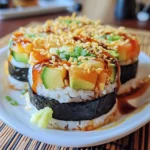
- Garnish and Serve: Drizzle the top of the stack generously with your homemade spicy mayo. Sprinkle with toasted sesame seeds, thin strips of nori, and a pinch of furikake, if using.
- Repeat: Repeat the process with the remaining ingredients to create three more stacks. Serve immediately with pickled ginger and wasabi on the side.
Nutrition
- Serving Size: one normal portion
- Calories: 480