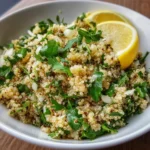
Ingredients
This recipe relies on fresh, simple components that come together to create a symphony of flavor and texture. Each ingredient plays a crucial role, from the nutty, protein-packed base to the bright, zesty dressing that ties it all together.
- For the Quinoa Salad:
- 1 cup uncooked quinoa (white, red, or tricolor): This is the foundation of our salad. Quinoa is a complete protein, meaning it contains all nine essential amino acids, making this salad incredibly satisfying and nutritious. Rinsing it before cooking is a crucial step to remove its natural coating, called saponin, which can impart a bitter taste.
- 2 cups water or vegetable broth: Using vegetable broth instead of water is a simple trick to infuse the quinoa with a deeper, more savory flavor from the very beginning of the cooking process.
- 1 large English cucumber, finely diced: English cucumbers have thin skin and fewer seeds than regular cucumbers, providing a crisp, refreshing crunch without any bitterness or wateriness.
- 1 cup cherry or grape tomatoes, halved: These little gems add a burst of sweetness and a beautiful splash of color. Halving them allows them to absorb the dressing perfectly.
- 1/2 cup finely chopped red onion: Red onion provides a sharp, zesty bite that cuts through the richness of the other ingredients. Soaking it in cold water for 10 minutes before adding it can mellow its intensity if you prefer a milder flavor.
- 1 cup chopped fresh parsley: Don’t skimp on the fresh herbs! Parsley brings a clean, peppery brightness that is essential to the salad’s fresh character.
- 1/2 cup chopped fresh mint: Mint adds a surprising and delightful layer of cool, refreshing flavor that elevates the salad from good to truly special.
- 1/2 cup crumbled feta cheese (optional): For a creamy, salty, and tangy element that complements the lemon and herbs beautifully. For a vegan version, you can omit it or use a plant-based feta alternative.
- 1/3 cup toasted pine nuts or slivered almonds (optional): This adds a wonderful nutty flavor and a delightful textural contrast to the soft quinoa and crisp vegetables.
- For the Lemon Herb Dressing:
- 1/2 cup extra virgin olive oil: The base of our dressing. A good quality extra virgin olive oil will lend a fruity, peppery note.
- 1/3 cup freshly squeezed lemon juice (from about 2 lemons): This is the star of the show. Freshly squeezed juice is non-negotiable for a bright, authentic citrus flavor that bottled juice simply cannot replicate.
- 1 tablespoon Dijon mustard: This acts as an emulsifier, helping to bind the oil and lemon juice together into a smooth, creamy dressing. It also adds a subtle tangy depth.
- 2 cloves garlic, minced: Fresh garlic provides a pungent, aromatic kick that is central to Mediterranean flavors.
- 1 teaspoon honey or maple syrup (optional): A small amount of sweetener balances the acidity of the lemon and the sharpness of the Dijon mustard, creating a more well-rounded dressing. Use maple syrup for a strictly vegan option.
- 1/2 teaspoon salt, or to taste: Essential for bringing out all the other flavors.
- 1/4 teaspoon black pepper, freshly ground: Freshly ground pepper adds a touch of spice and complexity.
Instructions
Follow these step-by-step instructions carefully to ensure your quinoa is perfectly fluffy, your vegetables are crisp, and your dressing is harmoniously blended. The process is simple, but each step is key to achieving the perfect final result.
Step 1: Cook the Quinoa to Perfection
The first and most important step is preparing the quinoa base. Place the uncooked quinoa in a fine-mesh sieve and rinse it thoroughly under cold running water for at least 30-60 seconds. Rub the grains with your fingers while rinsing. This crucial step removes the natural saponin coating, which can make the quinoa taste soapy or bitter. Once rinsed, drain it well.
In a medium saucepan, combine the rinsed quinoa and the 2 cups of water or vegetable broth. Bring the mixture to a boil over medium-high heat. Once it’s boiling, reduce the heat to low, cover the saucepan with a tight-fitting lid, and let it simmer for 15 minutes. After 15 minutes, most of the liquid should be absorbed. Remove the saucepan from the heat, but keep it covered, and let it stand for an additional 5-10 minutes. This steaming period is vital as it allows the quinoa to absorb the remaining moisture and become light and fluffy. After it has rested, uncover the saucepan and fluff the quinoa gently with a fork. Spread the cooked quinoa on a large baking sheet in a single layer to cool down completely. This prevents it from clumping together and ensures your salad isn’t warm or soggy.
Step 2: Prepare the Vegetables and Herbs
While the quinoa is cooking and cooling, you can prepare the rest of your salad components. This is a great way to use your time efficiently. Wash and dry all your produce. Finely dice the English cucumber, halve the cherry tomatoes, and finely chop the red onion. If you find the flavor of raw red onion too strong, you can place the chopped onion in a small bowl of ice water for about 10 minutes, then drain and pat dry. This simple trick mellows its sharp bite significantly.
Next, wash and thoroughly dry your fresh herbs. This is important, as wet herbs can make the salad watery. Finely chop the parsley and mint. If you are using feta cheese, crumble it. If you’re adding nuts for crunch, you can toast them by placing them in a dry skillet over medium-low heat for 3-5 minutes, tossing frequently until they are fragrant and lightly golden. Be sure to watch them closely as they can burn quickly.
Step 3: Whisk the Lemon Herb Dressing
Creating a vibrant, emulsified dressing is key to a delicious salad. In a small bowl or a glass jar with a lid, combine the extra virgin olive oil, freshly squeezed lemon juice, Dijon mustard, minced garlic, optional honey or maple syrup, salt, and freshly ground black pepper. Whisk the ingredients together vigorously until they are well combined and the dressing has thickened slightly. This process is called emulsification, where the mustard helps the oil and lemon juice blend together instead of separating. Alternatively, if using a jar, you can simply secure the lid and shake it vigorously for about 30 seconds. Taste the dressing and adjust the seasoning if necessary. You might want a little more salt, a bit more lemon for tartness, or a touch more sweetener for balance.
Step 4: Combine and Chill
Once the quinoa has cooled completely to room temperature, transfer it to a large salad bowl. Add the diced cucumber, halved tomatoes, chopped red onion, fresh parsley, and fresh mint. If you are using them, add the crumbled feta cheese and toasted nuts.
Pour about two-thirds of the prepared dressing over the salad. Gently toss everything together until all the ingredients are evenly coated in the dressing. It’s best to start with less dressing and add more as needed to avoid over-saturating the salad. The quinoa will absorb a lot of the flavor, so be generous but controlled.
For the best possible flavor, cover the salad bowl and refrigerate it for at least 30 minutes before serving. This chilling time allows the flavors to meld and marinate together, resulting in a much more cohesive and delicious final dish. Just before serving, give the salad one final toss and add the remaining dressing if you feel it needs it.
Nutrition
- Serving Size: one normal portion
- Calories: 380
- Fat: 22g
- Fiber: 8g
- Protein: 12g