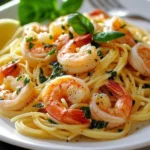
Ingredients
This recipe focuses on fresh, high-quality ingredients to bring out the best flavors in your Lemon Garlic Shrimp Pasta. Each ingredient plays a crucial role in creating a dish that’s both vibrant and deeply satisfying.
- Shrimp (1 pound, peeled and deveined): The star of the show! Use fresh or frozen shrimp, ensuring they are peeled and deveined for ease of cooking and eating. Medium to large shrimp works best, as they hold their shape well and are substantial in each bite. Consider purchasing shrimp that is already cleaned to save time, or opt for shell-on shrimp for a slightly richer flavor if you are comfortable peeling them. Frozen shrimp should be thoroughly thawed before cooking to ensure even cooking.
- Pasta (1 pound, linguine or fettuccine recommended): Long pasta shapes like linguine or fettuccine are ideal for this dish as they beautifully capture the lemon garlic sauce. Spaghetti, angel hair, or even penne can also be used depending on your preference. For a healthier option, consider whole wheat pasta or gluten-free alternatives like brown rice pasta or chickpea pasta. The key is to cook the pasta al dente, meaning “to the tooth,” so it retains a slight firmness and doesn’t become mushy when combined with the sauce.
- Olive Oil (½ cup, extra virgin): The foundation of our flavorful sauce. Extra virgin olive oil provides a rich, fruity base and is essential for sautéing the garlic and shrimp. Its quality directly impacts the overall flavor of the dish, so opt for a good quality olive oil. Olive oil not only adds flavor but also helps to emulsify the sauce and coat the pasta beautifully.
- Garlic (6-8 cloves, minced): Garlic is the aromatic backbone of this recipe. Freshly minced garlic is crucial for the best flavor. Don’t be shy with the garlic – it mellows out as it cooks and infuses the olive oil with its pungent aroma. Adjust the amount to your preference; for a milder flavor, use fewer cloves, and for a stronger garlic kick, use more. Mince the garlic finely to prevent burning and ensure even distribution of flavor.
- Lemon (2 large, zest and juice): Lemon is what brightens and elevates this dish. We use both the zest and juice for maximum lemon flavor. The zest provides aromatic oils, while the juice adds acidity and tang. Make sure to zest the lemons before juicing them. Use fresh lemons for the best flavor; bottled lemon juice lacks the same vibrancy and freshness.
- Dry White Wine (½ cup, optional): White wine adds depth and complexity to the sauce. A dry white wine like Pinot Grigio, Sauvignon Blanc, or Chardonnay works well. If you prefer to omit the wine, substitute it with chicken broth or vegetable broth for added moisture and flavor. The alcohol in the wine cooks off, leaving behind a subtle fruity and acidic note that complements the lemon and garlic.
- Red Pepper Flakes (¼ teaspoon, or to taste): A pinch of red pepper flakes adds a subtle warmth and a hint of spice to balance the richness of the sauce. Adjust the amount to your spice preference; you can add more for a spicier dish or omit it altogether if you prefer no heat. The red pepper flakes provide a pleasant counterpoint to the bright lemon and savory garlic.
- Fresh Parsley (¼ cup, chopped): Fresh parsley adds a pop of color and freshness. It’s best added at the end as a garnish to maintain its bright green color and fresh flavor. Italian flat-leaf parsley is recommended for its robust flavor, but curly parsley can also be used. Parsley not only enhances the visual appeal of the dish but also provides a fresh, herbaceous note that balances the richness of the sauce.
- Butter (2 tablespoons, unsalted): Butter adds richness and silkiness to the sauce, creating a luxurious mouthfeel. Unsalted butter is preferred to control the overall saltiness of the dish. The butter emulsifies with the olive oil and lemon juice, creating a creamy and cohesive sauce that beautifully coats the pasta and shrimp.
- Salt and Black Pepper (to taste): Essential seasonings to enhance all the flavors. Use sea salt or kosher salt for the best flavor. Freshly ground black pepper is also recommended for its aromatic quality. Season generously at each stage of cooking – when cooking the shrimp, the sauce, and finally, when tossing everything together. Taste and adjust seasoning as needed to ensure the dish is perfectly balanced.
- Pasta Water (reserved): Liquid gold! Reserving pasta water is crucial for creating a perfectly emulsified and luscious sauce. The starchy pasta water helps to bind the sauce together and create a silky, clinging texture that coats the pasta and shrimp beautifully. Always reserve at least 1 cup of pasta water before draining the pasta.
Instructions
Follow these step-by-step instructions to create a restaurant-quality Lemon Garlic Shrimp Pasta in your own kitchen. Each step is designed to maximize flavor and ensure perfectly cooked shrimp and pasta.
- Cook the Pasta to Al Dente Perfection: Begin by bringing a large pot of salted water to a rolling boil. Generously salting the water is important as it seasons the pasta from the inside out. Add your chosen pasta (linguine or fettuccine recommended) to the boiling water and cook according to package directions, or until al dente. Al dente means “to the tooth” in Italian; the pasta should be cooked through but still have a slight firmness when bitten into. Overcooked pasta will become mushy and lose its texture when combined with the sauce. While the pasta is cooking, proceed to the next steps to efficiently prepare the sauce and shrimp.
- Prepare Your Flavor Base: Garlic and Olive Oil Infusion: While the pasta is cooking, heat olive oil in a large skillet or pan over medium heat. Use a large enough skillet to accommodate all the pasta and shrimp later on. Once the oil is shimmering and heated through (but not smoking), add the minced garlic and red pepper flakes (if using). Sauté the garlic for about 1-2 minutes, stirring frequently, until it becomes fragrant and lightly golden. Be careful not to burn the garlic, as burnt garlic will taste bitter. The aroma of sautéing garlic is a key indicator that you’re on the right track! This step is crucial for infusing the olive oil with the aromatic base of garlic and a hint of spice.
- Sauté the Shrimp to Pink Perfection: Increase the heat to medium-high. Add the peeled and deveined shrimp to the skillet with the garlic-infused oil. Spread the shrimp in a single layer to ensure even cooking. Cook the shrimp for 2-3 minutes per side, until they turn pink and opaque and are just cooked through. Overcooking shrimp will make them rubbery and tough, so it’s important to cook them just until they are done. The exact cooking time will depend on the size of your shrimp. You’ll know they are ready when they curl slightly and are no longer translucent. Remove the cooked shrimp from the skillet and set aside. This prevents overcooking while you finish the sauce.
- Deglaze and Build the Lemon White Wine Sauce: Reduce the heat back to medium. If using white wine, pour it into the skillet to deglaze the pan. Deglazing means scraping up any browned bits from the bottom of the pan, which are packed with flavor. Let the wine simmer for 1-2 minutes, allowing the alcohol to evaporate and the flavors to concentrate. If you are omitting the wine, you can skip this step or deglaze with a tablespoon of lemon juice or a splash of chicken broth instead. Next, add the lemon juice and lemon zest to the skillet. Stir well to combine all the flavors and create a vibrant lemon base for the sauce. Let the sauce simmer gently for a minute or two to allow the flavors to meld together.
- Create a Luscious Sauce with Butter and Pasta Water: Reduce the heat to low. Add the butter to the lemon garlic sauce and stir until it is melted and incorporated. The butter adds richness and silkiness to the sauce, creating a luxurious texture. Now, it’s time to use the reserved pasta water. Before draining the pasta, scoop out about 1 cup of the starchy pasta water and set it aside. Drain the cooked pasta thoroughly. Pour about ½ cup of the reserved pasta water into the skillet with the sauce. The starch in the pasta water helps to emulsify the sauce, creating a creamy and cohesive texture that will cling beautifully to the pasta. Stir the sauce and pasta water together, allowing the sauce to thicken slightly. You may need to add a little more pasta water if the sauce seems too thick.
- Combine Pasta, Shrimp, and Sauce: The Grand Finale: Add the cooked pasta to the skillet with the lemon garlic sauce. Toss the pasta gently to coat it evenly with the sauce. Make sure every strand of pasta is glistening with the flavorful sauce. Add the cooked shrimp back to the skillet and gently toss everything together, ensuring the shrimp are heated through and coated in the sauce. Be careful not to over-mix, as you want to keep the shrimp tender and the pasta intact.
- Season, Garnish, and Serve Immediately: Season the Lemon Garlic Shrimp Pasta with salt and freshly ground black pepper to taste. Taste the dish and adjust seasoning as needed to ensure it is perfectly balanced. Stir in most of the chopped fresh parsley, reserving a little for garnish. Toss everything together one last time. Serve immediately while it’s hot and flavorful. Garnish each serving with the remaining fresh parsley and a lemon wedge, if desired. Serving immediately ensures the pasta is perfectly al dente, the shrimp is tender, and the sauce is at its best. Enjoy your homemade Lemon Garlic Shrimp Pasta!
Nutrition
- Serving Size: one normal portion
- Calories: 650
- Protein: 45g