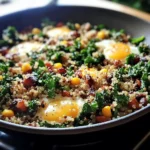
Ingredients
- Quinoa: 1 cup, uncooked. The base of our skillet, quinoa is a complete protein and adds a wonderful nutty flavor and fluffy texture.
- Vegetable Broth: 2 cups. Used to cook the quinoa, adding flavor and keeping it moist. Low sodium is preferred to control salt levels.
- Olive Oil: 2 tablespoons. For sautéing vegetables and adding healthy fats. Extra virgin olive oil is recommended for its flavor and health benefits.
- Onion: 1 medium, chopped. Adds savory depth and aromatics to the skillet base. Yellow or white onion works well.
- Garlic: 2 cloves, minced. Essential for flavor, garlic enhances the savory notes and provides a pungent kick.
- Kale: 5 cups, chopped. The star green, providing a boost of vitamins and a slightly bitter, earthy flavor that cooks down beautifully. Any type of kale will work – curly, lacinato (dino), or baby kale.
- Bell Pepper: 1 medium, chopped. Adds sweetness, color, and crunch. Any color bell pepper will work, red, yellow, or orange are particularly vibrant.
- Cherry Tomatoes: 1 cup, halved. Adds a burst of juicy sweetness and acidity that balances the earthy flavors.
- Eggs: 6 large. Provides protein and richness, cooked to your preference – sunny-side up, over easy, or scrambled.
- Feta Cheese: ¼ cup, crumbled (optional). Adds a salty, tangy, and creamy finish. Can be substituted with nutritional yeast for a vegan option or omitted for dairy-free.
- Salt: To taste. Enhances the flavors of all ingredients. Sea salt or kosher salt is recommended.
- Black Pepper: To taste. Adds a touch of spice and complements the other flavors. Freshly ground black pepper is best.
- Red Pepper Flakes: ¼ teaspoon (optional). For a touch of heat. Adjust to your spice preference or omit entirely.
- Fresh Parsley: 2 tablespoons, chopped (for garnish). Adds freshness and visual appeal. Other herbs like chives or cilantro can also be used.
Instructions
- Cook the Quinoa: Rinse the quinoa thoroughly under cold water in a fine-mesh sieve. This removes any saponins, which can give it a bitter taste. In a medium saucepan, combine the rinsed quinoa and vegetable broth. Bring to a boil over high heat, then reduce heat to low, cover, and simmer for 15-20 minutes, or until the quinoa is cooked through and the liquid is absorbed. The quinoa is ready when it looks fluffy and the germ ring has separated. Once cooked, fluff with a fork and set aside. This step can be done ahead of time to speed up the morning preparation.
- Sauté Aromatics: While the quinoa is cooking, prepare the vegetables. Heat olive oil in a large, oven-safe skillet (cast iron is ideal) over medium heat. Add the chopped onion and cook for 3-5 minutes, or until softened and translucent, stirring occasionally. Sautéing the onion first brings out its sweetness and mellows its sharpness, creating a flavorful base for the skillet. Don’t rush this step; allowing the onions to soften properly contributes significantly to the overall taste.
- Add Garlic and Bell Pepper: Add the minced garlic and chopped bell pepper to the skillet with the softened onions. Cook for another 3-5 minutes, stirring frequently, until the bell pepper is slightly tender-crisp and the garlic is fragrant. Be careful not to burn the garlic, as it can become bitter. The bell pepper should retain a bit of bite; we don’t want it to become mushy.
- Incorporate Kale: Add the chopped kale to the skillet. You might need to add it in batches as it can be quite voluminous initially. Stir constantly until the kale wilts down significantly and turns a vibrant green color. This usually takes about 5-7 minutes. Massaging the kale slightly while it cooks can help it break down faster. Cooking the kale properly is essential; we want it tender and slightly sweet, not tough or bitter.
- Stir in Quinoa and Tomatoes: Once the kale is wilted, stir in the cooked quinoa and halved cherry tomatoes. Season with salt, black pepper, and red pepper flakes (if using). Mix everything together well to combine all the flavors. The heat from the skillet will gently warm the quinoa and tomatoes, releasing their flavors and creating a cohesive mixture. Taste and adjust seasoning as needed.
- Create Wells and Add Eggs: Using a spoon, create six small wells in the quinoa and vegetable mixture in the skillet. Crack an egg into each well. Spacing the wells evenly will help ensure the eggs cook uniformly.
- Bake or Cook on Stovetop: For baking: Preheat oven to 375°F (190°C). Transfer the skillet to the preheated oven and bake for 8-12 minutes, or until the egg whites are set and the yolks are cooked to your desired doneness. For runnier yolks, bake for less time; for firmer yolks, bake longer. For stovetop cooking: Cover the skillet and cook over low heat for 8-12 minutes, or until the egg whites are set and the yolks are cooked to your liking. Stovetop cooking may require slightly longer cooking times, and you might need to add a tablespoon or two of water to the skillet before covering to create steam and help cook the eggs evenly.
- Garnish and Serve: Once the eggs are cooked, remove the skillet from the oven or stovetop. Sprinkle crumbled feta cheese (if using) and fresh chopped parsley over the skillet. Serve immediately while warm. The feta adds a lovely salty and creamy counterpoint to the savory skillet, and the fresh parsley brightens the dish with its herbaceous notes.
Nutrition
- Serving Size: one normal portion
- Calories: 280
- Protein: 15g