

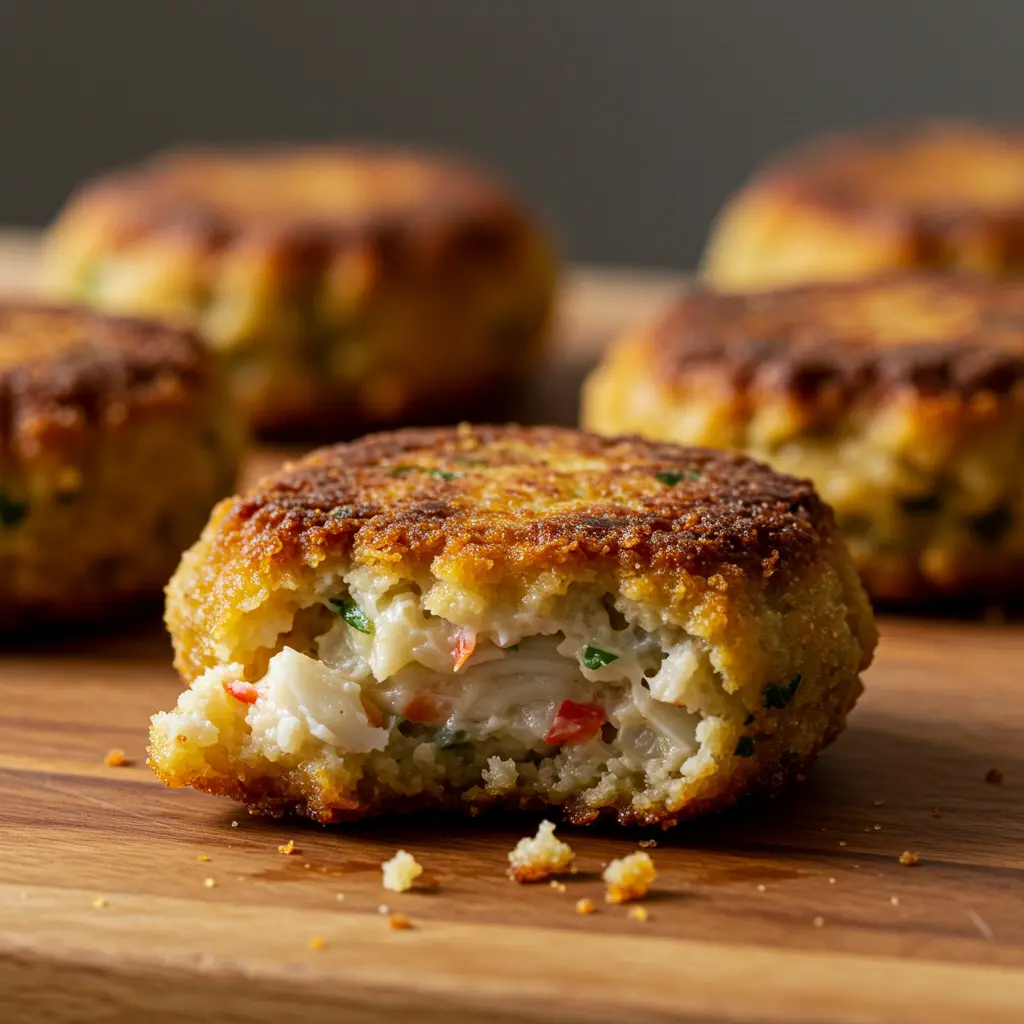
Crab cakes are the epitome of coastal cuisine, a delightful blend of tender crab meat and aromatic spices, all fried to golden perfection. Whether you’re hosting a dinner party or looking to elevate a simple weeknight meal, Golden Crispy Crab Cakes are sure to impress. This article will guide you through everything you need to know about making and serving these delicious crab cakes, from the essential ingredients to additional tips for culinary success.
Ingredients: The Building Blocks of Flavor
Creating the perfect crab cake begins with selecting the right ingredients. Here’s what you’ll need:
- 2 cups lump crab meat: The star of the show, providing the rich, succulent flavor.
- 1/2 cup breadcrumbs: Adds texture and helps bind the crab cakes.
- 1/4 cup mayo: Ensures the crab cakes remain moist and flavorful.
- 1 egg: Binds the ingredients together for a cohesive cake.
- 2 tbsp Dijon mustard: Offers a tangy kick to balance the sweetness of the crab.
- 1 tbsp lemon juice: Enhances the flavors and adds freshness.
- 1/2 tsp Old Bay seasoning: A classic choice for seasoning seafood.
- Salt & pepper to taste: Adjusts the seasoning to your preference.
- Oil for frying: Choose a neutral oil with a high smoke point for best results.
Instructions: Crafting the Perfect Crab Cake
Follow these steps to ensure your crab cakes are golden, crispy, and utterly delicious:
- Mix the Ingredients: In a large bowl, combine the crab meat, breadcrumbs, mayo, egg, mustard, lemon juice, Old Bay seasoning, salt, and pepper. Mix gently to avoid breaking up the crab meat.
- Form the Cakes: Shape the mixture into small cakes, about 2-3 inches in diameter, ensuring they hold together well.
- Heat the Oil: In a frying pan, heat oil over medium heat. The oil should be hot but not smoking.
- Fry the Crab Cakes: Place the crab cakes in the pan, cooking for about 3-4 minutes on each side until they are golden brown and crispy.
- Drain and Serve: Remove the crab cakes from the pan and drain on paper towels. Serve warm for the best flavor and texture.
Nutrition Facts: A Health-Conscious Indulgence
One of the appeals of crab cakes is their relatively balanced nutritional profile. Each cake offers:
- Calories: 150
- Protein: 10g
- Fat: 8g
- Carbs: 10g
- Fiber: 1g
These numbers make crab cakes a satisfying yet moderate indulgence, especially when part of a well-rounded meal.
How to Serve: Elevating Your Crab Cake Experience
Serving crab cakes is not just about presenting a dish; it’s an opportunity to create a culinary experience that tantalizes the taste buds and delights the eyes. Whether you’re hosting an elegant dinner party or preparing a casual family meal, the way you serve crab cakes can elevate their appeal and enhance their flavor. Here are some creative serving ideas to inspire you:
1. On a Bed of Greens
One of the simplest yet most elegant ways to serve crab cakes is on a bed of fresh greens. Consider using peppery arugula, which adds a delightful contrast to the sweetness of the crab, or a vibrant mix of baby greens such as spinach, kale, and frisée. Toss the greens lightly with a light vinaigrette—perhaps a lemon-herb vinaigrette or a classic balsamic dressing—to add a zesty kick. The freshness of the greens not only provides a beautiful presentation but also balances the richness of the crab cakes, making each bite a harmonious blend of flavors.
2. With a Dipping Sauce
Enhancing the flavor profile of crab cakes can be achieved by pairing them with a variety of dipping sauces. Traditional options like tartar sauce or aioli are classic companions, but don’t hesitate to get creative. A spicy mayo, made by blending mayonnaise with sriracha or chipotle, adds a delightful heat that complements the crab’s sweetness. For a fresh twist, consider a mango or pineapple salsa, which adds a tropical flair and a hint of sweetness. You can also serve a homemade remoulade sauce, a zesty mix of mayonnaise, mustard, and pickles, providing a creamy, tangy contrast. Present these sauces in small ramekins or a decorative platter for a colorful and inviting display.
3. As a Sandwich
Transform your crab cakes into a scrumptious sandwich for a more casual yet satisfying meal. Start with a soft, toasted roll—brioche or potato rolls work beautifully. Layer in the crab cake, then add fresh, crisp lettuce and juicy tomato slices. For an extra layer of flavor, a dollop of remoulade or a zesty lemon aioli can elevate the sandwich, making it not just a meal but a gourmet experience. Consider adding avocado slices or pickled red onions for a touch of creaminess and acidity, respectively. Serve with a side of sweet potato fries or crispy potato chips for a delightful crunch.
4. With a Side of Slaw
A refreshing slaw can serve as the perfect counterpart to the rich and savory crab cakes. Opt for a classic coleslaw with cabbage, carrots, and a tangy dressing, or try a more unique variation, such as a jicama and mango slaw, which adds a crunchy texture and vibrant color. Incorporating ingredients like cilantro, lime juice, or even a hint of jalapeño can add depth and brightness to the slaw. The acidity and crunch will cut through the richness of the crab cakes, making each bite refreshing and satisfying. Serve the slaw in a separate bowl or right next to the crab cakes for a visually appealing presentation.
5. As an Appetizer Trio
For a sophisticated touch, consider serving crab cakes as part of an appetizer trio. Pair them with other seafood delicacies like shrimp cocktail and smoked salmon on a beautifully arranged platter. Accompany with a variety of dipping sauces, pickled vegetables, and crusty bread for a stunning display. This arrangement not only highlights the crab cakes but also provides guests with a delightful tasting experience, allowing them to savor a range of flavors and textures.
6. Garnished with Fresh Herbs
Enhancing your crab cakes with fresh herbs can add an aromatic and visually appealing touch. Consider garnishing with finely chopped chives, parsley, or dill just before serving. Not only do these herbs add a pop of color, but they also impart fresh flavors that complement the dish. A sprinkle of lemon zest can also brighten the presentation, adding a citrusy note that pairs beautifully with the crab.
7. Infused with Seasonal Ingredients
Take advantage of seasonal ingredients to elevate your crab cake presentation. In the summer, serve with heirloom tomatoes and fresh basil, creating a Caprese-inspired dish. In the fall, consider pairing with roasted butternut squash and a sage-infused cream sauce. This not only keeps your presentation fresh and exciting but also allows you to highlight local produce and flavors.
By implementing these serving ideas, you can transform your crab cake experience from a simple meal into an extraordinary culinary occasion. Whether you opt for a classic presentation or get adventurous with flavors and accompaniments, the key is to balance the rich, savory profile of the crab cakes with fresh, vibrant elements that enhance the overall dining experience. Enjoy the creativity and the deliciousness that comes with serving these delightful seafood treats!
Additional Tips: Mastering the Art of Crab Cakes
Creating the perfect crab cake requires not only a great recipe but also a few essential techniques to elevate your dish. Here are some comprehensive tips that will help you master the art of crab cakes:
Choose Quality Crab Meat
The foundation of an exceptional crab cake is, without a doubt, the crab meat. To achieve the best flavor and texture, it is crucial to select high-quality crab meat. Here are a few pointers:
- Fresh vs. Canned: Whenever possible, opt for fresh crab meat from a reputable seafood market. Look for lump crab meat, which consists of large, tender pieces that provide a delightful texture. If fresh crab is not available, high-quality canned crab meat can be a suitable alternative. Always choose brands that specify the meat’s origin and check for minimal additives.
- Type of Crab: Different types of crab can yield different flavors and textures. Blue crab is often preferred for its sweet, delicate taste, but you can also experiment with Maryland crab, Dungeness crab, or even king crab for unique variations.
- Inspect for Shells: Regardless of the type of crab meat you choose, always inspect it for any shell fragments. Removing these ensures a smoother texture and a more enjoyable eating experience.
Chill Before Frying
One of the most crucial steps in preparing crab cakes is the chilling process. Once you’ve formed your crab cakes, refrigerate them for at least 30 minutes before frying. Here’s why this step is essential:
- Binding Agents: Chilling helps the binding agents, such as eggs and breadcrumbs, to meld with the crab meat and other ingredients. This ensures that the crab cakes hold their shape during cooking and don’t fall apart.
- Flavor Development: Allowing the crab cakes to sit in the refrigerator not only helps with their structure but also allows the flavors to develop and intensify, leading to a more harmonious taste profile.
- Texture: The chilling process firms up the crab cakes, making them easier to handle and fry without becoming mushy.
Test the Oil Temperature
Getting the oil temperature just right is vital for achieving perfectly cooked crab cakes. Here’s how you can ensure your oil is at the ideal temperature:
- Use a Thermometer: For the most accurate measurement, use a cooking thermometer. The oil should be heated to about 350°F (175°C). This temperature allows for a crispy exterior while ensuring the inside is cooked through.
- Sizzle Test: If you don’t have a thermometer, you can conduct a simple sizzle test. Drop a small piece of the crab cake mixture into the oil. If it sizzles vigorously and begins to brown within a few seconds, the oil is hot enough. If it sinks without sizzling, the oil needs more time to heat up.
- Adjusting Heat: Keep an eye on the heat throughout the frying process. If the oil starts to smoke, it’s too hot. Conversely, if the crab cakes are cooking too slowly or absorbing too much oil, the temperature is likely too low.
Avoid Overcrowding the Pan
Frying crab cakes requires careful attention to the cooking environment. Overcrowding the pan can lead to uneven cooking and greasy crab cakes. Here are some tips to manage this effectively:
- Batch Cooking: Fry crab cakes in small batches, allowing plenty of space between each cake. This will enable the oil to circulate properly and ensures that each cake gets an equal amount of heat.
- Maintain Temperature: Adding too many cakes at once can drop the oil temperature significantly, resulting in soggy and undercooked crab cakes. By frying in batches, you can maintain a consistent temperature, leading to a beautifully golden brown crust.
- Use a Large Skillet: If you have the option, use a wide, heavy-bottomed skillet. This will give you more surface area to work with and help maintain even heating.
Final Thoughts
Mastering the art of crab cakes involves a combination of selecting the right ingredients, employing proper techniques, and maintaining attention to detail throughout the cooking process. By following these additional tips, you’ll not only enhance the flavor and texture of your crab cakes but also ensure that they are a standout dish at any gathering or meal. Whether you’re serving them as an appetizer or a main course, these culinary triumphs are sure to impress your family and friends.
FAQs: Your Crab Cake Questions Answered
Can I bake crab cakes instead of frying them?
Yes, you can bake crab cakes for a healthier alternative. Preheat your oven to 375°F (190°C) and bake the crab cakes on a greased baking sheet for about 15-20 minutes, flipping halfway through, until golden brown.
How do I store leftover crab cakes?
Store leftover crab cakes in an airtight container in the refrigerator for up to 3 days. Reheat them in a preheated oven at 350°F (175°C) for 10-15 minutes.
Can I freeze crab cakes?
Yes, crab cakes can be frozen. Place them on a baking sheet, freeze until solid, then transfer to a freezer-safe container. They can be stored for up to 3 months.
What can I substitute for Old Bay seasoning?
If you don’t have Old Bay seasoning, you can use a combination of paprika, celery salt, and cayenne pepper for a similar flavor profile.
Conclusion: Enjoy Your Homemade Golden Crispy Crab Cakes
Golden Crispy Crab Cakes are a delightful dish that brings the flavors of the sea to your table. With this comprehensive guide, you’re well-equipped to make and serve crab cakes that are both delicious and visually appealing. Whether you’re a seasoned cook or new to seafood, these crab cakes are sure to become a favorite in your culinary repertoire. Enjoy the satisfaction of crafting a dish that’s as pleasing to the palate as it is to the eye!
Print
Golden Crispy Crab Cakes
Ingredients
Creating the perfect crab cake begins with selecting the right ingredients. Here’s what you’ll need:
- 2 cups lump crab meat: The star of the show, providing the rich, succulent flavor.
- 1/2 cup breadcrumbs: Adds texture and helps bind the crab cakes.
- 1/4 cup mayo: Ensures the crab cakes remain moist and flavorful.
- 1 egg: Binds the ingredients together for a cohesive cake.
- 2 tbsp Dijon mustard: Offers a tangy kick to balance the sweetness of the crab.
- 1 tbsp lemon juice: Enhances the flavors and adds freshness.
- 1/2 tsp Old Bay seasoning: A classic choice for seasoning seafood.
- Salt & pepper to taste: Adjusts the seasoning to your preference.
- Oil for frying: Choose a neutral oil with a high smoke point for best results.
Instructions
Follow these steps to ensure your crab cakes are golden, crispy, and utterly delicious:
- Mix the Ingredients: In a large bowl, combine the crab meat, breadcrumbs, mayo, egg, mustard, lemon juice, Old Bay seasoning, salt, and pepper. Mix gently to avoid breaking up the crab meat.
- Form the Cakes: Shape the mixture into small cakes, about 2-3 inches in diameter, ensuring they hold together well.
- Heat the Oil: In a frying pan, heat oil over medium heat. The oil should be hot but not smoking.
- Fry the Crab Cakes: Place the crab cakes in the pan, cooking for about 3-4 minutes on each side until they are golden brown and crispy.
- Drain and Serve: Remove the crab cakes from the pan and drain on paper towels. Serve warm for the best flavor and texture.
Nutrition
- Serving Size: one normal portion
- Calories: 150
- Fat: 8g
- Carbohydrates: 10g
- Fiber: 1g
- Protein: 10g