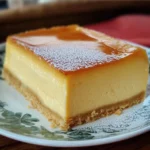
Ingredients
Scale
Before we dive into the baking process, let’s make sure you have everything you need. This recipe is divided into two parts: the cake layer and the custard layer.
For the Cake Layer:
- 1 ½ cups (190g) all-purpose flour: Provides structure to the cake. Make sure to measure correctly by spooning flour into the measuring cup and leveling it off.
- 1 ½ teaspoons baking powder: A leavening agent that helps the cake rise and become light. Ensure it’s fresh for optimal results.
- ¼ teaspoon salt: Enhances the flavors of the other ingredients and balances the sweetness.
- ½ cup (1 stick or 113g) unsalted butter, softened: Adds richness, moisture, and flavor to the cake. Softened butter creams more easily with sugar.
- ¾ cup (150g) granulated sugar: Sweetens the cake and contributes to its tender texture.
- 2 large eggs: Bind the ingredients together, add richness, and contribute to the cake’s structure.
- ½ teaspoon vanilla extract: Enhances the flavor of the cake and adds a warm, aromatic note.
- ½ cup (120ml) milk: Adds moisture to the cake batter and helps to create a smooth consistency.
For the Custard Layer:
- 3 large eggs: Form the base of the custard, providing richness and structure.
- ¼ cup (50g) granulated sugar: Sweetens the custard and helps to create a smooth texture.
- 2 cups (480ml) whole milk: The primary liquid component of the custard, adding creaminess and richness. Whole milk is recommended for the best flavor and texture, but you can use 2% if needed.
- 1 teaspoon vanilla extract: Infuses the custard with a classic vanilla flavor, complementing the cake beautifully.
- Pinch of nutmeg (optional): Adds a warm, subtle spice to the custard, enhancing its depth of flavor. Ground nutmeg is preferred, freshly grated is even better if you have it.
Instructions
Now for the fun part – bringing this classic custard cake to life! Follow these step-by-step instructions for baking success:
Part 1: Making the Cake Layer
- Preheat oven and prepare pan: Preheat your oven to 350°F (175°C). Grease and flour a 9×13 inch baking pan. You can also line the bottom with parchment paper for easier removal, leaving an overhang to lift the cake out later.
- Combine dry ingredients: In a medium bowl, whisk together the flour, baking powder, and salt. Whisking ensures the baking powder is evenly distributed throughout the flour. Set aside.
- Cream butter and sugar: In a large bowl or the bowl of a stand mixer, cream together the softened butter and granulated sugar until light and fluffy. This process incorporates air into the butter and sugar mixture, which is essential for a tender cake. This should take about 2-3 minutes on medium speed.
- Beat in eggs and vanilla: Beat in the eggs one at a time, mixing well after each addition. Then, stir in the vanilla extract. Mixing one egg at a time ensures proper emulsification and a smooth batter.
- Alternate adding dry and wet ingredients: Gradually add the dry ingredients to the wet ingredients, alternating with the milk, beginning and ending with the dry ingredients. Mix on low speed until just combined. Be careful not to overmix, as this can lead to a tough cake. The order of addition – dry, milk, dry, milk, dry – helps to maintain the emulsion and prevent gluten development.
- Pour batter into pan: Pour the cake batter into the prepared baking pan and spread evenly.
Part 2: Making the Custard Layer
- Whisk eggs and sugar: In a separate medium bowl, whisk together the eggs and granulated sugar until lightly combined.
- Heat milk: In a saucepan, heat the milk over medium heat until it is just simmering – small bubbles will form around the edges, but do not let it boil. Scalding the milk (heating it just below boiling) helps to create a smoother custard and enhances the flavor.
- Temper the eggs: Slowly drizzle a small amount of the hot milk into the egg mixture while whisking constantly. This process, called tempering, gradually raises the temperature of the eggs and prevents them from scrambling when added to the hot milk. Continue adding hot milk in a slow, steady stream while whisking continuously until about half of the milk has been added.
- Combine mixtures: Pour the warmed egg mixture into the saucepan with the remaining hot milk.
- Cook the custard: Cook over medium-low heat, stirring constantly with a spatula or wooden spoon, until the custard thickens slightly and coats the back of a spoon. This should take about 5-7 minutes. It’s crucial to stir constantly and keep the heat low to prevent the custard from curdling or scorching. The custard should be thick enough to leave a trail when you run your finger across the back of the spoon.
- Stir in vanilla and nutmeg: Remove the custard from the heat and stir in the vanilla extract and nutmeg (if using).
Part 3: Assembling and Baking
- Pour custard over cake batter: Gently and evenly pour the warm custard over the unbaked cake batter in the pan. Don’t worry if it seems like the custard is just sitting on top – it will bake beautifully into the cake.
- Bake: Bake in the preheated oven for 40-50 minutes, or until the cake is lightly golden brown and a toothpick inserted into the cake portion (avoiding the custard) comes out clean. The custard will still be slightly jiggly, but it will set further as it cools.
- Cool completely: Let the custard cake cool completely in the pan on a wire rack before cutting and serving. Cooling is essential for the custard to fully set and for the flavors to meld together. Resist the urge to cut into it while it’s still warm!
Part 4: Serving
- Chill (optional): For an even firmer custard and a refreshing treat, you can chill the cake in the refrigerator for a few hours before serving.
- Cut and enjoy: Cut the cooled custard cake into squares or slices and serve.
Nutrition
- Serving Size: one normal portion
- Calories: 300