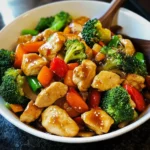
Ingredients
Creating a truly exceptional Chicken and Veggie Stir-Fry starts with selecting the freshest, highest quality ingredients. Each component plays a vital role in the overall flavor and texture of the dish. Here’s a breakdown of what you’ll need:
- Chicken Breast: (1.5 lbs, boneless, skinless) – The lean protein base of our stir-fry. Opt for skinless, boneless chicken breasts, and consider organic or free-range for enhanced flavor and ethical sourcing. Chicken thighs can also be used for a richer, more succulent result, though they may require slightly longer cooking time.
- Broccoli Florets: (1 large head, about 4 cups) – Provides a wonderful cruciferous crunch and earthy flavor. Choose firm, tightly closed florets with a vibrant green color, avoiding any yellowing or browning.
- Bell Peppers: (2 large, assorted colors – red, yellow, orange) – Adds sweetness, color, and a satisfying crispness. Using a mix of colors not only enhances the visual appeal but also provides a wider range of vitamins and antioxidants.
- Carrots: (2 medium, julienned or sliced) – Contributes sweetness and a delightful textural contrast. Peel and julienne or thinly slice carrots for even cooking and an elegant presentation. Baby carrots can be used as a shortcut, but slicing them lengthwise is recommended for better texture in the stir-fry.
- Snow Peas or Sugar Snap Peas: (6 oz) – Offers a delicate sweetness and a satisfying snap. Ensure they are bright green and firm. String them if necessary, though many varieties are now stringless. Sugar snap peas provide a slightly sweeter and crunchier alternative to snow peas.
- Onion: (1 medium, sliced) – Forms the aromatic foundation of the stir-fry, adding depth and savory notes. Yellow or white onions work well. Slice them thinly for quick cooking and even distribution of flavor.
- Garlic: (4 cloves, minced) – Essential for robust flavor and aromatic complexity. Fresh garlic is highly recommended for the best taste. Mince it finely to release its pungent oils and ensure even distribution throughout the dish.
- Ginger: (1 tablespoon, freshly grated) – Adds warmth, spice, and a distinctive Asian flavor profile. Fresh ginger root is crucial for authentic stir-fry flavor. Peel and grate it finely to maximize its aromatic impact.
- Soy Sauce: (1/4 cup, low sodium) – Provides umami and saltiness, essential for balancing the flavors. Opt for low-sodium soy sauce to control the salt content of the dish. Tamari (gluten-free soy sauce) or coconut aminos can be used as alternatives.
- Oyster Sauce: (2 tablespoons) – Adds richness, depth, and a subtle sweetness that enhances the savory notes. Vegetarian oyster sauce (made from mushrooms) is a great alternative for a vegetarian version (though this recipe contains chicken).
- Sesame Oil: (1 tablespoon) – Provides a nutty aroma and flavor, adding a signature touch to stir-fries. Toasted sesame oil is preferred for its more intense flavor, but use it sparingly as it can be overpowering.
- Cornstarch: (1 tablespoon) – Used to thicken the stir-fry sauce and create a glossy finish. Cornstarch is a common thickening agent in stir-fries, creating a silky smooth sauce that coats the ingredients beautifully.
- Chicken Broth: (1/4 cup, low sodium) – Adds moisture and helps to create a flavorful sauce. Low-sodium chicken broth allows for better control of the saltiness. Vegetable broth can also be used.
- Vegetable Oil or Canola Oil: (2 tablespoons) – For stir-frying at high heat. Choose a neutral oil with a high smoke point, such as vegetable oil, canola oil, or peanut oil. These oils can withstand high temperatures without burning, crucial for successful stir-frying.
- Optional Garnishes: (Sesame seeds, chopped green onions, red pepper flakes) – Adds visual appeal, texture, and an extra layer of flavor. Sesame seeds provide a nutty crunch, green onions offer freshness, and red pepper flakes add a touch of heat.
Instructions
Mastering the art of stir-frying is all about technique and timing. Follow these detailed instructions to create a Chicken and Veggie Stir-Fry that’s bursting with flavor and perfectly cooked every time:
- Prepare the Chicken: Begin by cutting the chicken breasts into bite-sized pieces, about 1-inch cubes or strips. This ensures even cooking and makes it easier to eat in a stir-fry. In a medium bowl, marinate the chicken with 1 tablespoon of soy sauce and 1 teaspoon of cornstarch. This simple marinade tenderizes the chicken and helps it brown beautifully during stir-frying. Let it marinate for at least 15 minutes, or up to 30 minutes in the refrigerator for even better flavor penetration.
- Prep the Vegetables: While the chicken marinates, prepare all your vegetables. Wash and chop the broccoli into florets, slice the bell peppers into strips, julienne or slice the carrots, string the snow peas (if necessary), slice the onion, mince the garlic, and grate the fresh ginger. Having all your vegetables prepped and ready to go is crucial for efficient stir-frying, as the cooking process is quick.
- Prepare the Stir-Fry Sauce: In a small bowl, whisk together the remaining soy sauce (3 tablespoons), oyster sauce, sesame oil, remaining cornstarch (1 teaspoon), and chicken broth. Ensure the cornstarch is fully dissolved to prevent clumps in the sauce. This sauce is the heart of the stir-fry, bringing together all the flavors and creating a luscious coating for the chicken and vegetables. Set the sauce aside near your cooking station for easy access.
- Heat the Wok or Skillet: Place a wok or a large skillet over high heat. Woks are ideal for stir-frying due to their shape, which distributes heat evenly and allows for quick cooking. If using a skillet, choose a large, heavy-bottomed one to retain heat effectively. Add the vegetable oil or canola oil to the hot wok or skillet. Heat the oil until it shimmers and is almost smoking – this high heat is essential for proper stir-frying and achieving that signature “wok hei” flavor (smoky, slightly charred taste).
- Stir-Fry the Chicken: Add the marinated chicken to the hot wok or skillet in a single layer, if possible. Avoid overcrowding the pan, as this will lower the temperature and cause the chicken to steam instead of sear. If necessary, cook the chicken in batches. Stir-fry the chicken for 3-5 minutes, or until it is cooked through and lightly browned. Remove the cooked chicken from the wok and set aside.
- Stir-Fry the Aromatics and Hard Vegetables: Add the sliced onion to the wok and stir-fry for 1-2 minutes until softened and fragrant. Then, add the minced garlic and grated ginger and stir-fry for another 30 seconds, until fragrant and aromatic. Be careful not to burn the garlic and ginger. Next, add the broccoli florets and carrots to the wok. Stir-fry for 3-4 minutes, or until they are slightly tender-crisp. These denser vegetables require a bit longer cooking time to achieve the desired texture.
- Add Softer Vegetables and Sauce: Add the bell pepper strips and snow peas (or sugar snap peas) to the wok. Stir-fry for another 2-3 minutes, until they are tender-crisp and still retain some of their vibrant color. Pour the prepared stir-fry sauce over the vegetables. Stir everything together to coat the vegetables evenly with the sauce.
- Combine Chicken and Simmer: Return the cooked chicken to the wok. Toss everything together to combine the chicken, vegetables, and sauce. Bring the sauce to a simmer and cook for 1-2 minutes, or until the sauce has thickened slightly and is glossy. This final simmer allows the flavors to meld together beautifully and creates a rich, flavorful coating.
- Serve Immediately: Remove the Chicken and Veggie Stir-Fry from the heat and serve immediately. Stir-fries are best enjoyed fresh and hot. Garnish with sesame seeds, chopped green onions, and red pepper flakes (if using) for added flavor and visual appeal. Serve over steamed rice, noodles, or quinoa for a complete and satisfying meal.
Nutrition
- Serving Size: one normal portion
- Calories: 400
- Fiber: 7g
- Protein: 35g