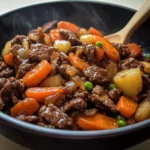
Ingredients
Scale
This recipe relies on a balance of savory, sweet, and aromatic components to create its signature flavor. Each ingredient is chosen for its specific role in building a complex and satisfying dish.
- For the Beef and Marinade:
- 1.5 lbs (680g) Flank Steak or Sirloin: These cuts are ideal for stir-frying as they are lean but flavorful and become incredibly tender when sliced thinly against the grain.
- 1 tablespoon Soy Sauce: This begins the flavoring process, seeping into the beef to provide a base layer of salty, umami flavor.
- 1 teaspoon Cornstarch: A secret weapon for tender beef. It creates a very thin coating that protects the meat from the high heat, locking in juices and resulting in a velvety texture.
- 1 teaspoon Sesame Oil: Adds a nutty, aromatic depth to the marinade that is characteristic of many Asian cuisines.
- For the Stir-Fry Sauce:
- 1/2 cup Low-Sodium Beef Broth: Forms the liquid base of our sauce, adding a rich, beefy flavor that complements the steak perfectly.
- 1/4 cup Low-Sodium Soy Sauce: The primary source of umami and saltiness in the sauce. Using low-sodium gives you more control over the final salt level.
- 2 tablespoons Honey or Maple Syrup: This provides the essential sweetness to balance the salty soy sauce and creates a beautiful, glossy glaze on the finished stir-fry.
- 1 tablespoon Rice Vinegar: Adds a subtle tang and brightness that cuts through the richness of the sauce, waking up all the other flavors.
- 1 tablespoon Cornstarch: This is our thickening agent. When heated, it will transform the liquid sauce into a luscious, coating consistency that clings to the beef and vegetables.
- 1 teaspoon Toasted Sesame Oil: Added at the end for its powerful, nutty aroma and flavor.
- For the Stir-Fry Assembly:
- 2 tablespoons High-Smoke-Point Oil (e.g., Avocado, Canola, or Grapeseed Oil): Essential for stir-frying, as these oils can withstand the high heat of the wok or skillet without burning and imparting a bitter taste.
- 4 cloves Garlic, minced: A foundational aromatic that provides a pungent, savory kick.
- 1 tablespoon Fresh Ginger, grated: Adds a warm, zesty, and slightly spicy note that brightens the entire dish.
- 1 large Yellow Onion, sliced: When cooked, the onion becomes sweet and tender, adding another layer of flavor and texture.
- 4 medium Carrots (about 2 cups), thinly sliced on the diagonal: Slicing them on a bias (diagonally) increases their surface area, allowing them to cook quickly while remaining crisp-tender. Their natural sweetness is a perfect counterpoint to the savory beef.
- 1 large Bell Pepper (any color), sliced: Adds a wonderful crunch, vibrant color, and fresh flavor. Red, orange, or yellow bell peppers will add extra sweetness.
- Optional Garnishes: Toasted sesame seeds, sliced green onions (scallions), fresh cilantro.
Instructions
The key to a successful stir-fry is preparation and speed. Have all your ingredients prepped and ready to go before you even turn on the heat. This process, known as “mise en place,” is non-negotiable for a perfect outcome.
- Prepare the Beef: Begin by preparing your steak. For easier slicing, place the beef in the freezer for 15-20 minutes. This will firm it up, allowing you to make very thin, uniform slices. Once chilled, slice the steak as thinly as possible against the grain. To find the grain, look for the parallel lines of muscle fiber running through the meat, and slice perpendicular to them. This simple step is crucial for ensuring tender, easy-to-chew beef.
- Marinate the Beef: In a medium bowl, combine the thinly sliced beef with 1 tablespoon of soy sauce, 1 teaspoon of cornstarch, and 1 teaspoon of sesame oil. Use your hands or a spoon to toss everything together until the beef is evenly coated. The cornstarch will feel a bit sticky, which is exactly what you want. Set the bowl aside to marinate for at least 15 minutes at room temperature, or up to an hour in the refrigerator. This allows the flavors to penetrate the meat and the cornstarch to begin its tenderizing magic.
- Mix the Stir-Fry Sauce: While the beef is marinating, prepare your sauce. In a separate small bowl or a liquid measuring cup, whisk together the beef broth, 1/4 cup of low-sodium soy sauce, honey (or maple syrup), rice vinegar, and the remaining 1 tablespoon of cornstarch. Whisk vigorously until the cornstarch is fully dissolved and there are no lumps. This is important to ensure a smooth, not lumpy, sauce later. Set the sauce mixture aside near your cooking station.
- Prepare the Vegetables and Aromatics: Wash and chop all your vegetables as directed in the ingredients list. Mince the garlic and grate the ginger. Having everything prepped and within arm’s reach is the secret to a stress-free stir-fry experience.
- Sear the Beef: Place a large wok or a heavy-bottomed skillet over high heat. Let it get screaming hot. You should see faint wisps of smoke rising from the surface. Add 1 tablespoon of the high-smoke-point oil and swirl to coat the bottom. Carefully add the marinated beef to the hot wok in a single layer, being careful not to overcrowd the pan. You may need to do this in two batches. Let the beef sear undisturbed for 1-2 minutes until a deep brown crust forms on the bottom. Then, use a spatula to flip and stir, cooking for another 1-2 minutes until it’s just cooked through. The beef will not be fully cooked at this stage, and that’s okay. Immediately remove the beef from the wok and transfer it to a clean plate.
- Sauté the Aromatics and Hard Vegetables: Reduce the heat slightly to medium-high. Add the remaining 1 tablespoon of oil to the wok. Add the sliced onions and cook, stirring frequently, for about 2-3 minutes until they begin to soften and become translucent. Add the minced garlic and grated ginger and cook for another 30 seconds until fragrant, being careful not to burn them. Immediately add the diagonally sliced carrots to the wok. Stir-fry for 3-4 minutes. The carrots are the hardest vegetable, so they need a head start to become tender.
- Add Softer Vegetables: Add the sliced bell peppers to the wok. Continue to stir-fry for another 2-3 minutes. You’re aiming for a “crisp-tender” texture—the vegetables should be cooked through but still have a pleasant bite and vibrant color.
- Combine and Sauce: Return the seared beef and any accumulated juices back to the wok with the vegetables. Give your prepared stir-fry sauce a quick re-whisk (as the cornstarch may have settled) and pour it all over the ingredients in the wok.
- Thicken the Sauce: Continue to cook, stirring constantly, as the sauce comes to a simmer. You will see it begin to bubble and thicken almost instantly, thanks to the cornstarch. This should only take about 1-2 minutes. The sauce will become glossy and will beautifully coat every piece of beef and every vegetable. Once the sauce has thickened, remove the wok from the heat immediately to prevent overcooking the beef.
- Serve: Taste and adjust seasoning if necessary, though it should be well-balanced. Serve your Beef and Carrot Stir-Fry immediately, garnished with a sprinkle of toasted sesame seeds and freshly sliced green onions for a final layer of flavor and texture.
Nutrition
- Serving Size: one normal portion
- Calories: 550
- Fiber: 7g
- Protein: 40g